(PENSACOLA) --- It was all about saving history at the June Architectural Review Board meeting.
Board members agreed to approve a 60-day demolition delay for 618 Bayou Boulevard based on its meeting National Register of Historic Places criteria.
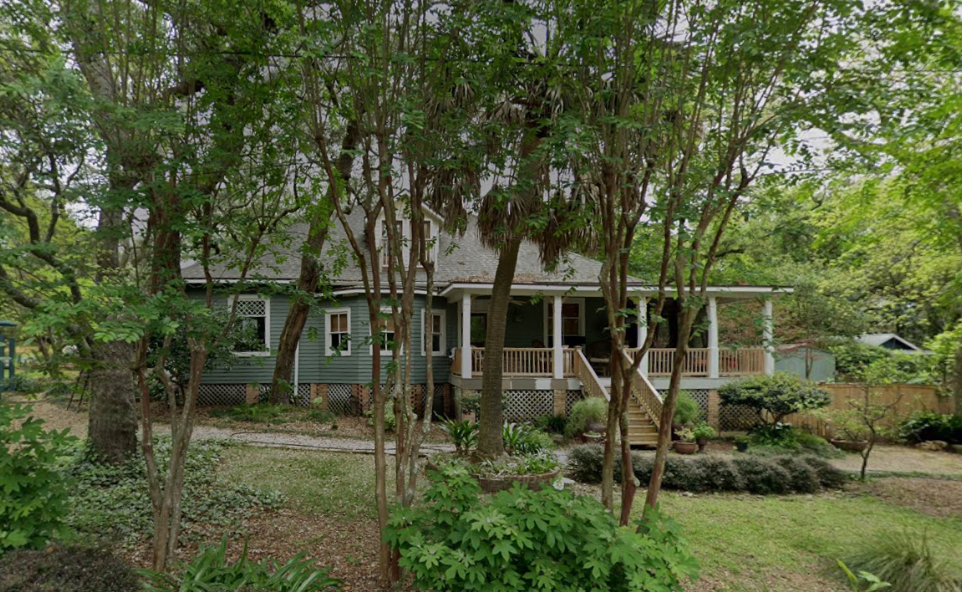
(Photo: 618 Bayou Blvd., a property which has a 60-day demolition delay while it is presented to the National Register for Historic Places for consideration)
The June 18 meeting is the second time home board members have attempted to preserve a property, following the rejection of a neighboring property slated for demolition.
Applicant George Stinton was not present for the meeting, but board members' interest did not waver, beginning with Ross Pristera, who detailed the property's significance.
“As we discussed, the house that was next door to it, or within that same area, was built around the same time or in the early 1900s with almost the same style and architectural features,” Pristera said. “But this one is in really good condition.”
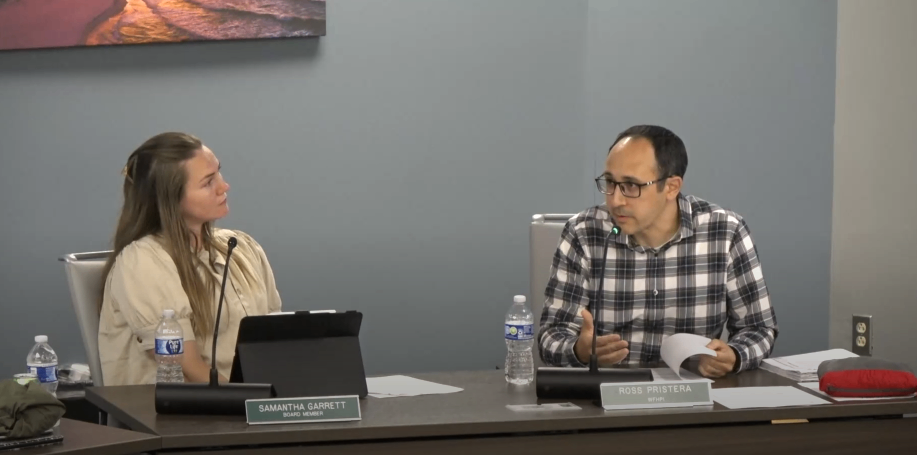
(Photo: Architectural Review Board Members Samantha Garrett and Ross Pristera at the June 18 meeting)
According to Pristera, all the “red flags” are there for redevelopment, including the property's large corner lot.
“I feel like it does contribute to the character of that area architecturally and early development there,” Pristera said.
Board member Yuri Ramos agreed.
“I have driven by many times, and it is a beautiful property,” Ramos said.
Chair George Mead was told that, aside from the meeting minutes posted online proposing preservation, there was no other way to communicate the property's significance to the public.
Board member Scott Fisher said unless the media notes it, the public will not notice, hence this OpGov.News report.
“I feel like the only thing that happens sometimes is that it goes in the paper,” Board member Scott Fisher said.
According to the meeting summary, per the City of Pensacola’s Historic Building Demolition Review Ordinance, the property’s architecture is "potentially significant,” specifically finding that the property's character should be maintained for the public interest. Board members, specifically Mead, agreed that the property, a “classic bungalow,” deserves preservation.
“It is a historic structure on that property,” Mead said.
Another East Street bungalow sparked a nearly hour-long debate at the request of Architect Scott Sallis, who plans to construct a new two-story, single-family residence with an attached garage, including a pool in the courtyard and a circular driveway.
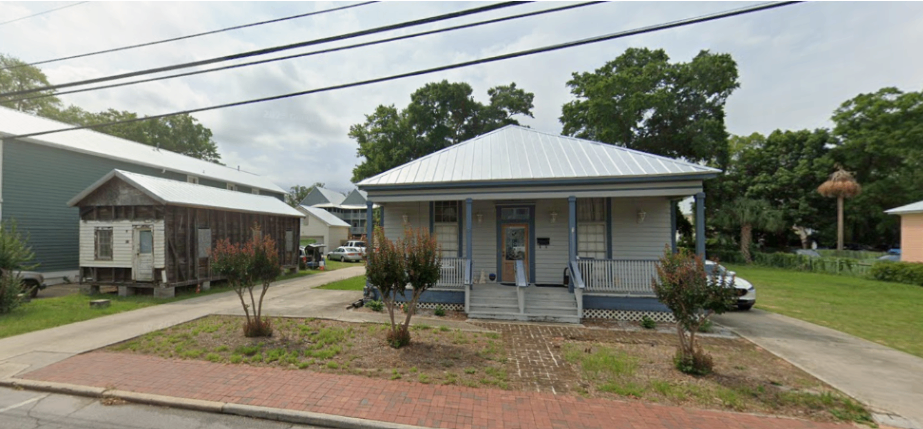
(Photo: East Government Street bungalow the Architectural Review Board ruled on June 18)
His plans failed for several reasons, including the relocation of an old cottage to another part of the property.
“This whole property needs some love,” Sallis told board members. “The cottage is literally scary.”
Board members called his conceptual approval a "fig leaf approach,” with Board member William Brantley noting the “weird easements” the change would create could affect resale. Additionally, Sallis was told the overall impact of high-density development on historic character was also unacceptable.
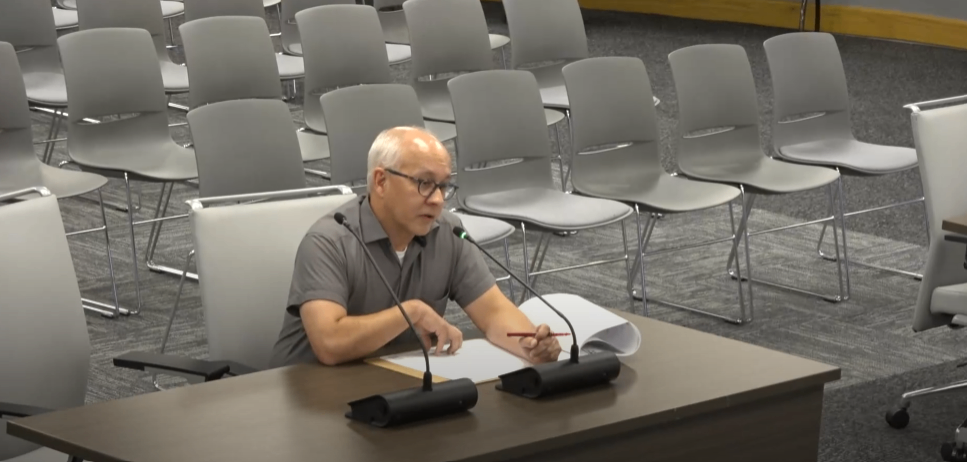
(Photo: Architect Scott Sallis debates with Architectural Review Board members, ultimately having his application denied)
“I ask the board to trust that every concern that each one of you has brought, we have discussed with the client, but it's been empty for years, and this is what they want,” Sallis said. “So I'm in a place where this (cottage) just stays abandoned, or we get this amazing development here that's got some weird driveway access.”
Chairman Mead informed Sallis that, while he “sees the struggles and desires,” compliance with the rules must be met, specifically with the cottage.
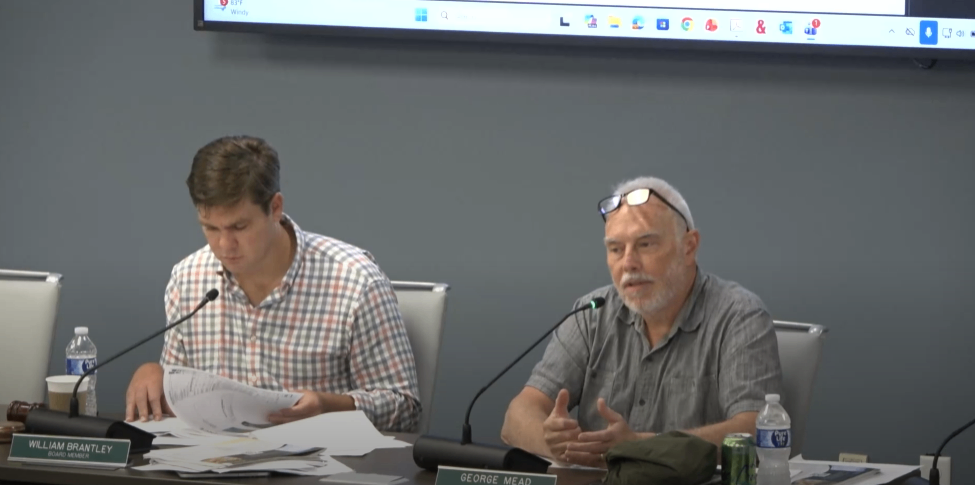
(Photo: Architectural Review Board Member William Brantley and Chairman George Mead)
"By putting it in the position on the lot with no access to the street, you've eliminated the possibility that it could ever be moved to someplace else and salvaged there, which I think is also a concern here," Mead said.
Mead said, "One of the efforts that we do undertake in these situations where the first option is to go ahead and move it to someplace where it can be itself on its own lot."
“This whole proposal, I think, could work by reorienting the cottage to direct access, whether by porte-cochere or otherwise,” Mead said. “There are a number of other things I could think of that would work, but it's not going to get as much house as they want.”
Bottom line, Mead said, “I don’t see how this fits,” and directed the architect back to the drawing board, asking for a more “sensitive” design.
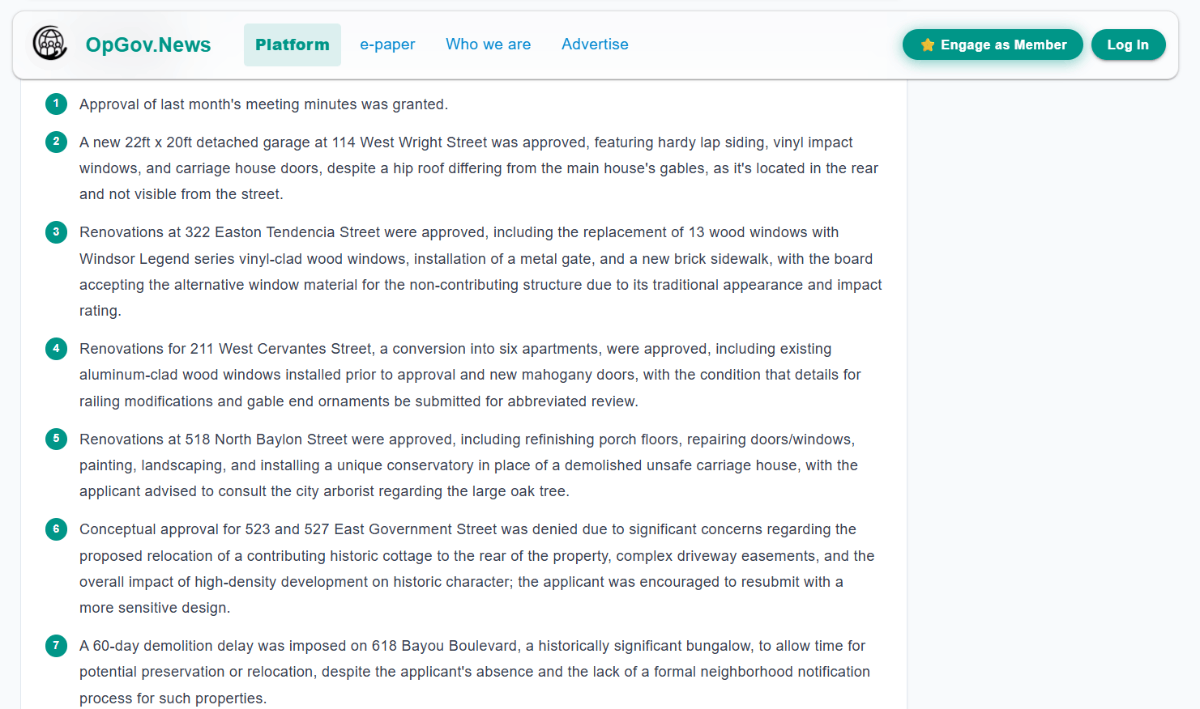
(OpGov.News platform Key Takeaways from the Pensacola Architectural Review Board June 17 meeting)
Other Key Takeaways from the meeting picked up by the OpGov.News summary includes approvals for finished porches and new window installations, as well as the approval for 211 West Cervantes Street to be converted into six apartments.
0
0

Comments