(SAN RAMON, Calif.) – Despite much of the city council meeting on October 13, 2026 being interrupted by accusations of the city working for a “communist state”, key issues were discussed, such as the recently approved Bella Village Apartments and its vote for municipal bond findings.
Bella Village Apartments, located on 2.99 acres at 2233 San Ramon Valley Boulevard, Contra Costa County, is set to construct 131 affordable housing units for primarily households earning 30-80% of area median income (AMI). It has qualified as a large family affordable housing development within the Bay Area. The project is expected to continue construction from this October to August 2028, developed by LIHTC Advisors, LLC, and financed by bond funding from California Municipal Finance Authority.
The contractors requested approximately $3.45 million in federal tax credits, but was recommended about $3.3 million. The project’s gross estimate is around $64.7 million, encompassing land, construction, development, and other management costs. Its finances would come from tax-exempt bonds, recycled tax-exempt bonds, tax credit equity, and delayed developer fees.
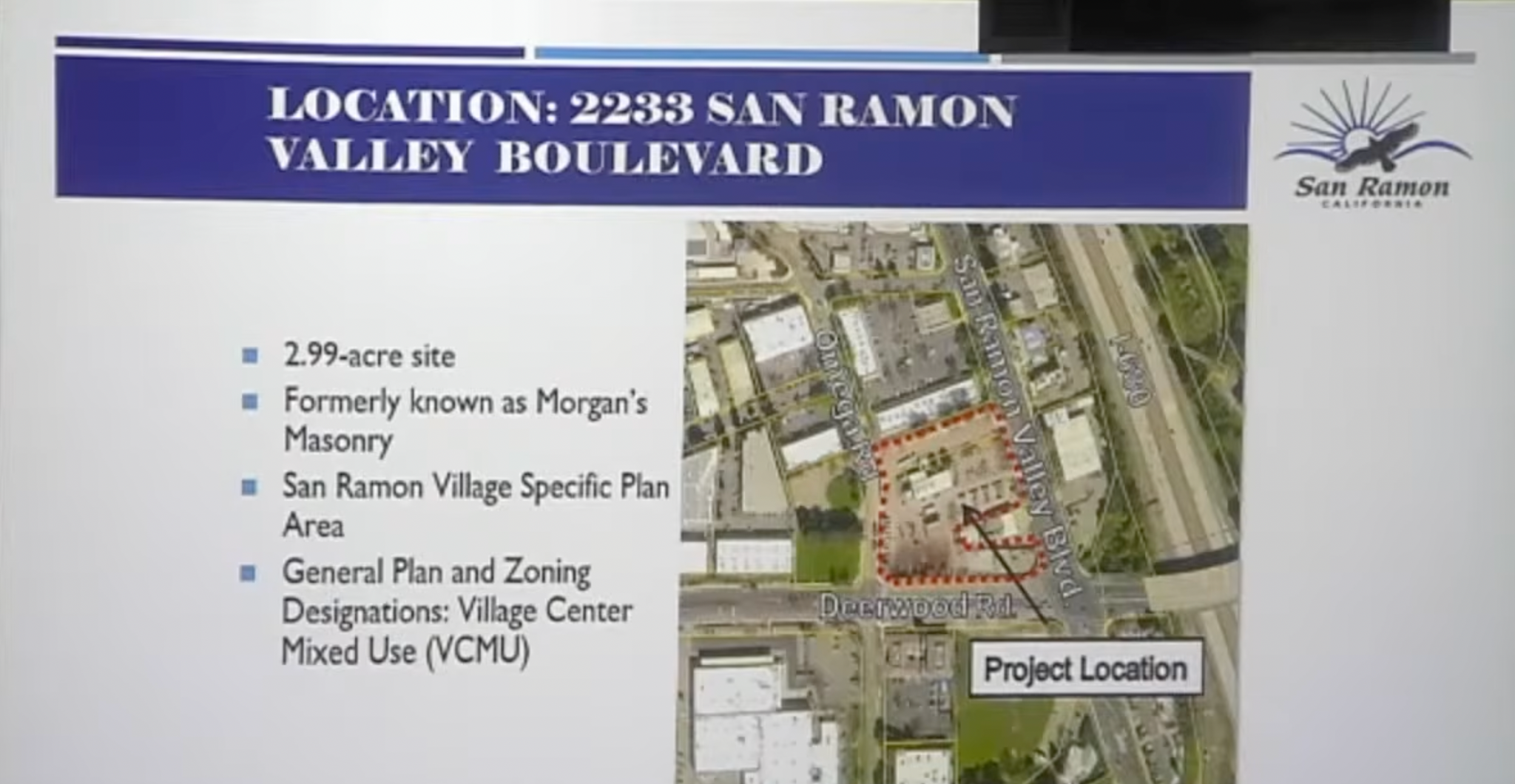
Photo Credit: City of San Ramon / Youtube / Video of October 13 City Council Meeting.
Before the council began the public hearing on the construction project, mayor Mark Armstrong reiterated that despite the number of public comments they have received, approval or rejection could not change the outcome of the project.
“The project has already been approved, and that approval cannot be reversed no matter how we vote tonight on this issue… whichever way we vote on this tonight, there are no city funds at stake,” he said.
Residents, however, were less concerned with the city’s funds than the broader implications of municipal backing, developers’ profits, and the project’s transparency.
Local residents William and Susan Ferreira submitted a written public comment that expressed strong opposition to using municipal bond financing for private corporate development. They stressed that municipal credit and bonding capacity are public resources that should be reserved for public welfare– construction schools, roads, parks, and improving public safety– not for private profiteers. They also emphasized the financial risk to taxpayers who may have to bear the brunt if the project faces delays and commercial failures.
Another resident, Susie Ferris-Inderkum, submitted a public comment via email that pointed out discrepancies between the project records.
“There are many previous and conflicting records which contain different financial quantities and statements regarding this project, the percentage of units and costs associated with them,” she wrote. “Given the significant number of previously approved Affordable Housing projects (including Eden), throughout the city, the public needs to understand…how these projects are being approved without solid financial footing.”
Ferris-Inderkum brings to light an important issue that many residents of San Ramon have been highlighting in council meetings. What she wants is transparency, so that the council and community can make informed decisions about city developments.
These transparency concerns were echoed in detailed objections submitted by urban planner and local watchdog Brian C. Swanson, AICP. Swanson raised significant public-hearing law compliance questions. OpGov.News emailed Swanson for an extended comment, and he described this discrepancy as part of a larger pattern of less-than-transparent meeting agendas. In his public comment, he pointed out that while the original TEFRA public notice listed a $45 million financing ceiling, the city’s agenda summary omitted this figure.
“Still, it also raises the question of why the TEFRA notice and the City’s agenda item summary differ…yes, again, part of a deliberate pattern, in my opinion,” he emailed.
The current location for this housing complex will be built on a former industrial masonry yard, which brings up concerns for future resident safety, pollution and noise levels, and possible soil contamination. When asked if the city has made any of these investigation reports public, Brian said that the CEQANet entry includes a Notice of Exemption. No further environmental analysis is required.
“But the time between May 7, 2024, and today…given all the redevelopment in San Ramon, should also raise major cumulative environmental impact concerns, that I believe the City is derelict in providing lawful, publicly available analysis,” Brian wrote back.
Despite the vocal community opposition and procedural concerns, the City Council ultimately voted unanimously to adopt Resolution 2026-122, approving CMFA’s issuance of up to $45 million in bonds for the Bella Village Apartments.
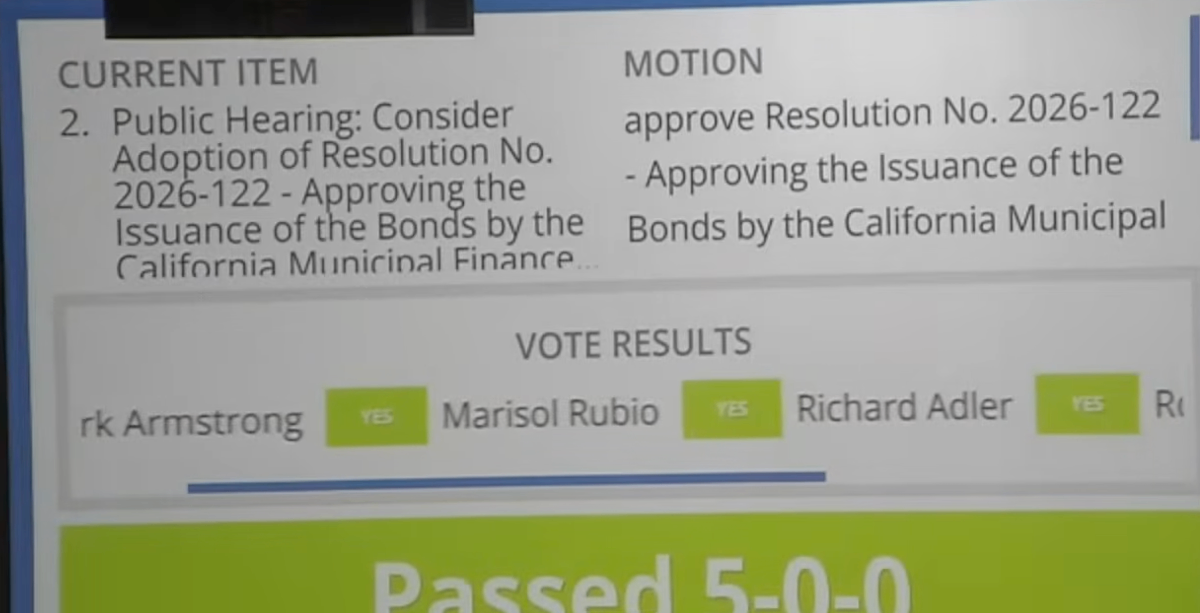
Photo Credit: City of San Ramon / Youtube / Video of October 13 City Council Meeting.
To add to or correct any information in this report, please contact me at shreya.d@lead4earth.org.
0
0

Comments