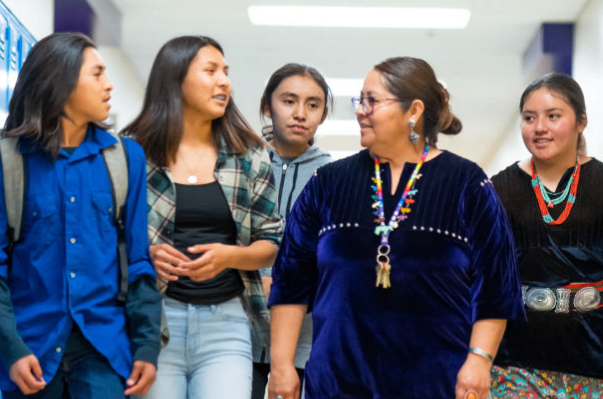
Photo Credit: iStock / Native American teacher and students
(MINNEAPOLIS, Minn.) – Coon Rapids and Anoka High Schools have introduced their first Ojibwe language courses. The schools began the courses in response to students requesting better access to Indigenous American languages.
Onboarding Anishinaabe (Ojibwe) language courses in Anoka-Hennepin School District is a step forward in reconnecting Native American students with their Indigenous heritage; Minnesota still falls far behind state requirements. American Indian language is now taught in 51 Minnesota school districts, up 68% since 2022-23.
According to a statewide report by the Midwest Indigenous Immersion Network, Minnesota public schools are struggling to meet legal requirements for American Indian language and culture courses.
State law requires any district with at least 5% or 100+ Native American students to offer indigenous culture courses. This means another 150 American Indian language teachers are needed to meet the requirement, but only 98 work in Minnesota public schools; only 11 are full-time.
That’s a teacher-student ratio of 1:257 in applicable districts, but a teacher shortage isn’t the only issue. Despite the law requiring applicable districts to offer Indigenous language studies, over three-fourths of the teachers surveyed had to develop most of their own curriculum. Many noted a lack of resources, funding, and curriculum support.
The report recommends increasing state funding, creating training programs, and continuing comprehensive language curriculum from early childhood through high school. A solid suggestion, but Minnesota isn’t the only state that needs work.
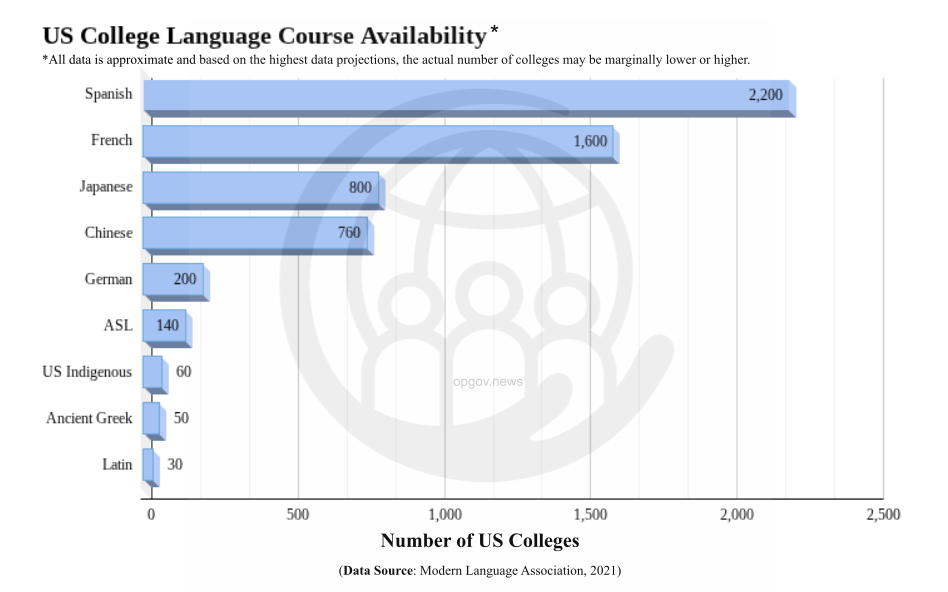
Chart Credit: Kristin Hassel / OpGov News
Spanish and French are taught in over 1.5 thousand US colleges and higher education institutions, but only 60-80 offer regional indigenous language courses. Of those, 35 are accredited Tribal Colleges and Universities. Languages are generally taught regionally and include Ojibwe, Dakota, Navajo, Ōlelo, Cherokee, Choctaw, Creek, Kiowa, Potawatomi, Muscogee, and Cayuga.
Bemidji University Assistant Professor of Ojibwe Language, and founder and former Director of the Ayaanikehkaagewaad Language Program with Niibi Center, Biidaabanikwe Kim Anderson, stressed the interconnectedness of Indigenous American languages with tribal culture and land, and how their words reveal a people's history and survival.
“Our language holds our worldview; there are things that are embedded in our language that are part of our value systems. It contains our understanding of the world, our ways of living and being with everything.” Anderson said, “I always tell my students that we have such a connection to land through the knowledge in our vast, expansive language.”
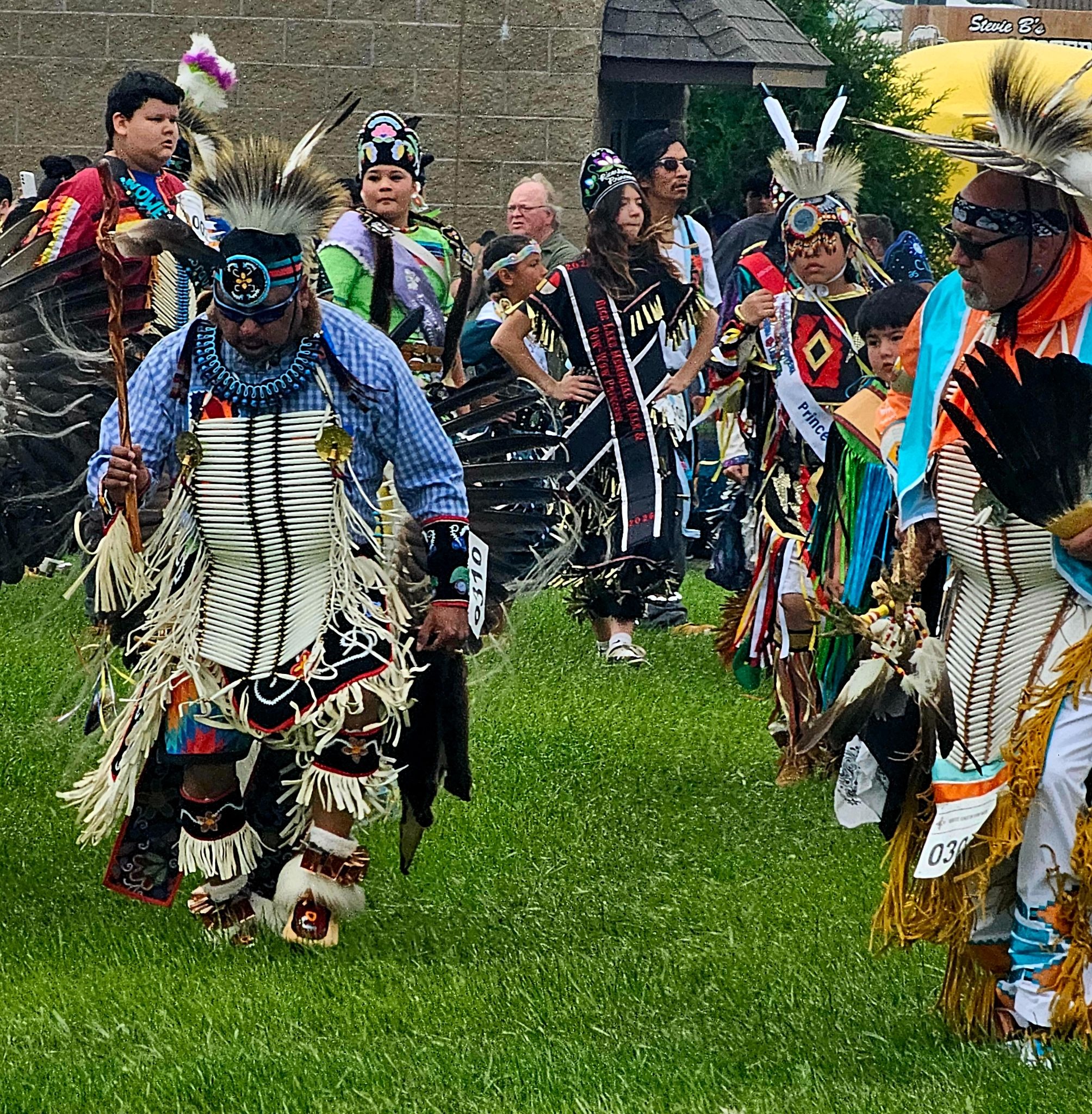
Photo Credit: Kristin Hassel/ OpGov News/ White Earth powwow 2025 opening ceremony
Anderson, also a member of the White Earth Nation Band of Ojibwe, used the example gaawaabaabiganikaag, which means the place of abundance of white clay in Anishinaabe. One word that describes an entire location. She explained that Indigenous American stories are rich with tribal culture and that stories exist for everything, down to the history of how Ojibwe learned to harvest maple syrup.
Though Anderson couldn’t relay the entire story because “there is no snow,” she gave a basic explanation, including that it tells of the harvest and how maple syrup is a superfood considered medicine for surviving harsh winters during times of food scarcity.
Despite deep roots in American history, Native American languages are treated more as an afterthought. Indigenous language and cultural studies not only strengthen Native students' identities, but also give non-Native students opportunities to learn about America pre-colonization.
When asked how learning an Indigenous American language would benefit non-indigenous people, Anderson took a more scientific approach, saying that aside from expanding their understanding of another culture:
“When the brain is learning other languages, it stimulates the neural pathways. For example, when I was working as a teacher in Bena, we had a first-grader we were told would likely never learn to read. She had this diagnosis at 7 years old, but through hearing English outside of Niigaane, then learning through the experience of Niigaane, she read. She went on to a 4-year degree; now she is in her master's.”
It’s important to note that Anderson expresses the power of all languages, of how learning a specific language can help students understand another, then another, expanding brain development at any age.
Advocates for the increase of teaching regional Indigenous American languages in more schools and colleges in the US are hoping that the new requirements and recent push to create applicable courses will help revive Native languages nationwide.
To add to or correct any information in this report, please contact me at kristin.h@lead4earth.org.
Interview with BSU Ass. Prof. Kim Anderson (1)
Interview with BSU Ass. Prof. Kim Anderson (1).pdf
0
0

Comments