(OAKLAND, Calif.) – The Oakland City Council left the chamber on Tuesday evening having approved two new labor agreements: a rank-and-file, and managers Memoriam of Understanding between the city and the Oakland Police Officers Association (OPOA). The council also advanced a companion salary ordinance–set to appear again on October 6th. These approvals, however, were not made without significant backlash from community members and local organizations.
The package resulted from a series of negotiations between the City of Oakland and the OPOA, with a goal of increasing staffing retention for the Oakland Police Department (OPD). It underlines a five year agreement from July 1, 2026 to June 30, 2031, over which employees will receive a 14% base wage increase. They will also make incremental contributions to healthcare and pension.
“The challenge here that the OPD faces is staffing level of the police officers. And I think that there is an all-out effort right now to increase that staffing,” said Mary Hao, the Human Resources Director for the City of Oakland.
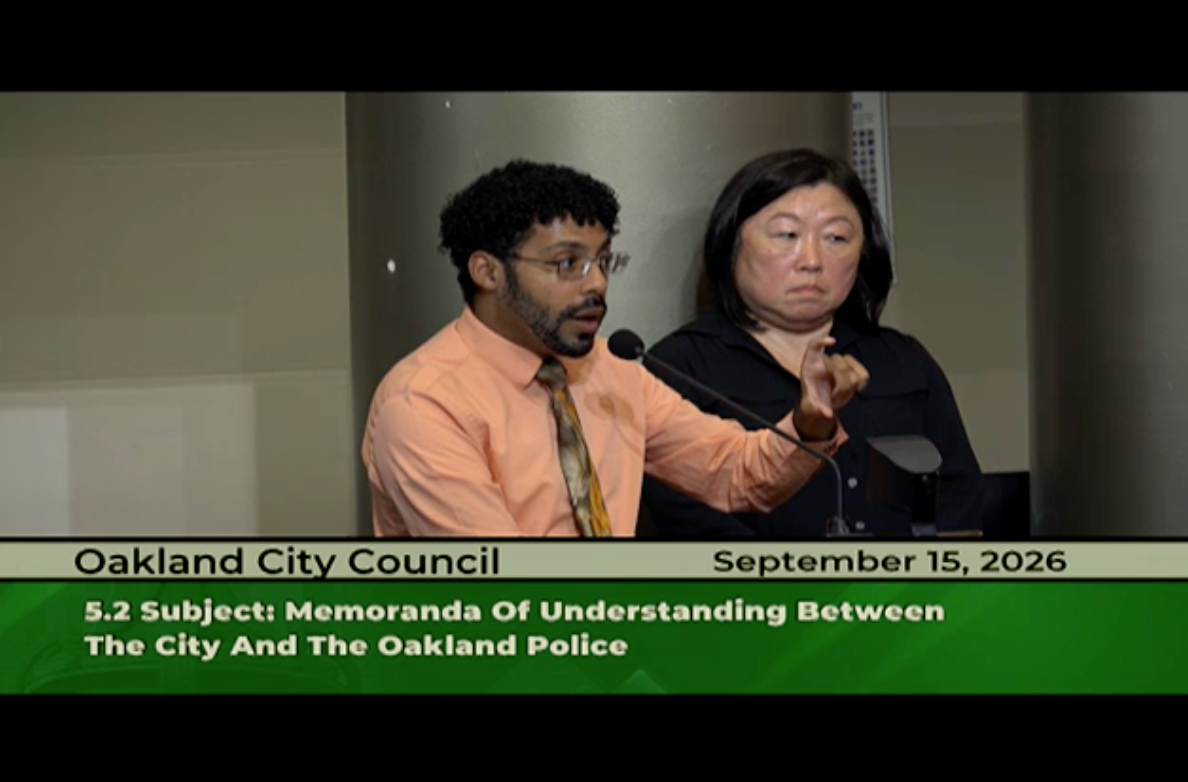
Photo Credit: City of Oakland / Granicus / Director of Finance Bradley Johnson
According to Bradley Johnson, the City of Oakland’s Director of Finance, an officer that sits with the OPD will look to leave the department typically within 4-6 years. The legislation, specifically moving more of the compensation into a longevity premium, would work to incentivize officers to stay with the Oakland force, Johnson explained.
A concern was raised by councilmember Carroll Fife regarding the lack of text capping OPD’s overtime spending. The number reached a jarring $55 million during the 2023-2024 fiscal cycle, exceeding the budget cap by roughly $31 million.
“If officers want to spend more time with their families and we’re going to rely on overtime to continue to fill the gap while we wait for the staffing levels to improve, I just wonder why we couldn’t then include some safeguards,” Fife explained.
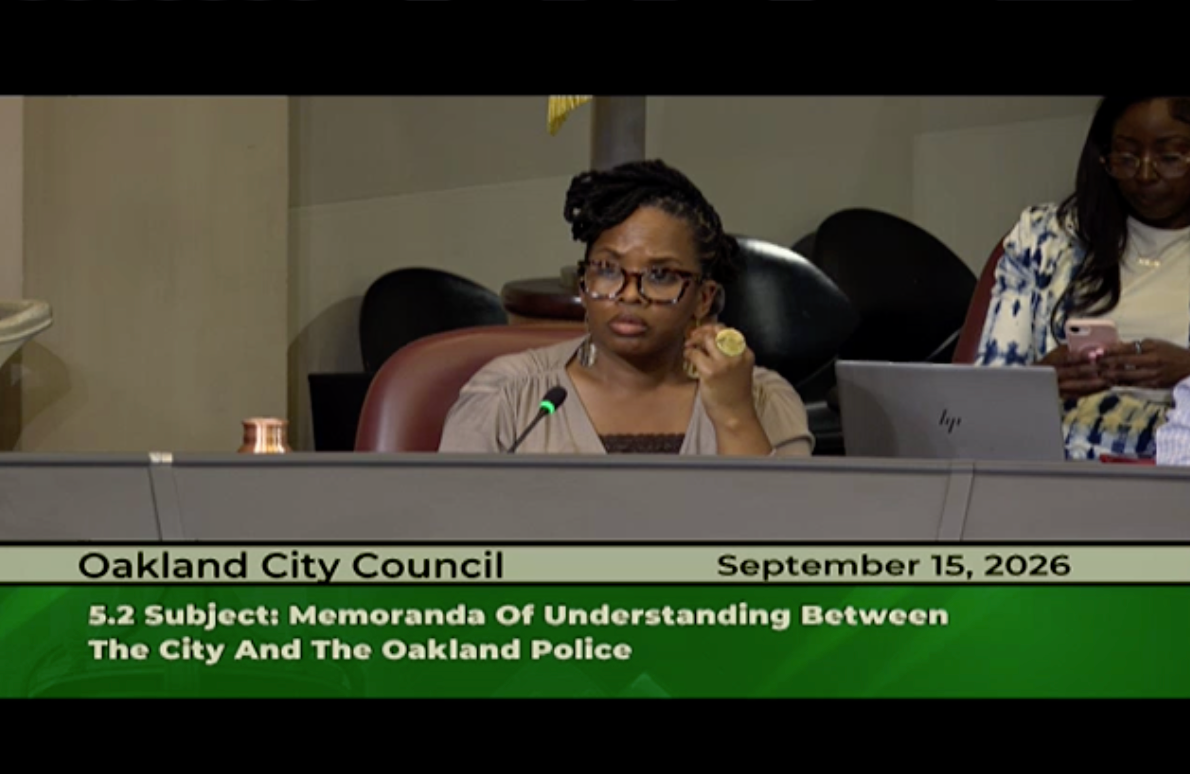
Photo Credit: City of Oakland / Granicus / Councilmember Carroll Fife
The councilmember also sought to understand the “Me Too” clause outlined in the agreement. Johnson explained that upon employees signing OPOA’s five year compensation package– including the 14% base-wage increase– that OPOA could receive the difference if another union negotiates a better package. Johnson reasoned that the clause acts as a safeguard against penalizing a bargaining unit for settling first.
Both qualms presented by Fife were echoed repeatedly in public comment, a total of 14 speakers signed up to speak on this specific agenda item. Several of which were members of IFPTE Local 21, a labor union with over 11,000 members spread across the San Francisco Bay Area.
“For the first time, the council is allowing “Me Too” for police to benefit from wages and benefit improvements of all other unions without having to feel the pain,” said Jennifer Foster, President of Local 21’s A&W chapter.
“Do we forget what actually solves crime, which is supporting healthy neighborhoods, well funded schools, having affordable housing, having an income?” said Mitra Zarinebaf with East Bay DSA and Stop Cop Nation. “There are other employees that deserve this type of pay, that deserve this type of support… that’s who runs our city.”
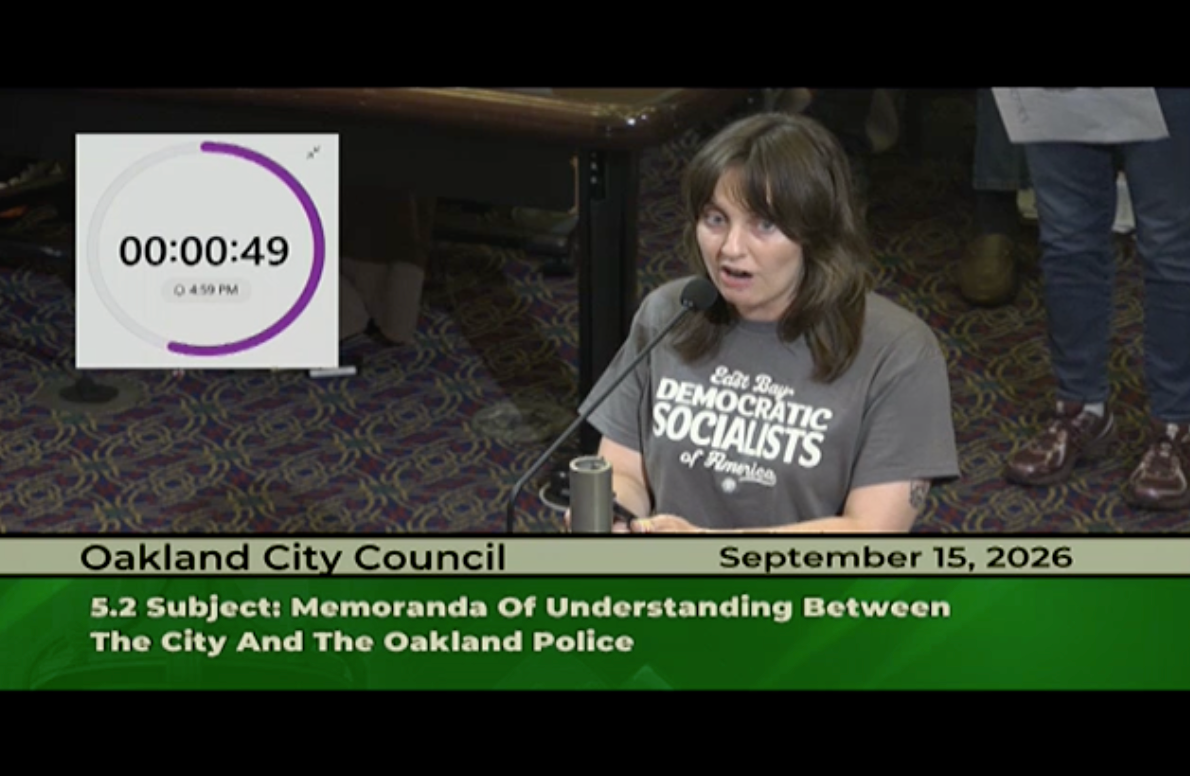
Photo Credit: City of Oakland / Granicus / Mitra Zarinebaf
After the line of public commenters proceeded with mirrored sentiments, the pieces of legislation were brought to a vote. They passed 7-1, with councilmember Fife as the only dissenter. If the council passes the accompanying salary ordinance on October 6, the official salary schedule will be formally amended.
OpGov.News reached out to the Oakland City Council for comment surrounding the financial implications of the wage increase, the inclusion of the "Me Too" clause, and why there isn't a present cap on overtime spending, but did not receive a response in time for publication.
To add to or correct any information in this report, please contact me at macey.w@lead4earth.org or leave a comment below with your thoughts.
1
0

Comments