(OPGOV GLOBAL) — An aging population, rising health care costs, and persistent disparities in access are placing increasing pressure on the U.S. health care system, according to three recent national reports that collectively paint a picture of growing demand, mounting financial challenges, and continued efforts to improve patient care.
The analyses, published by the Congressional Budget Office, the American Hospital Association, and the Commonwealth Fund, examined different aspects of the nation's health care landscape. Together, they found that demographic shifts, long-term federal spending projections, and unequal health outcomes are expected to shape health care policy and delivery for decades.
The findings also build on trends previously examined by OpGov.News in "AI Adoption Expands Across U.S. Healthcare as Regulators Weigh Oversight Challenges," which explored how hospitals are incorporating new technologies while policymakers weigh oversight, patient safety, and accountability.
While artificial intelligence represents one area of transformation, the latest reports suggest demographic and economic forces are likely to have an even broader impact on the future of health care.
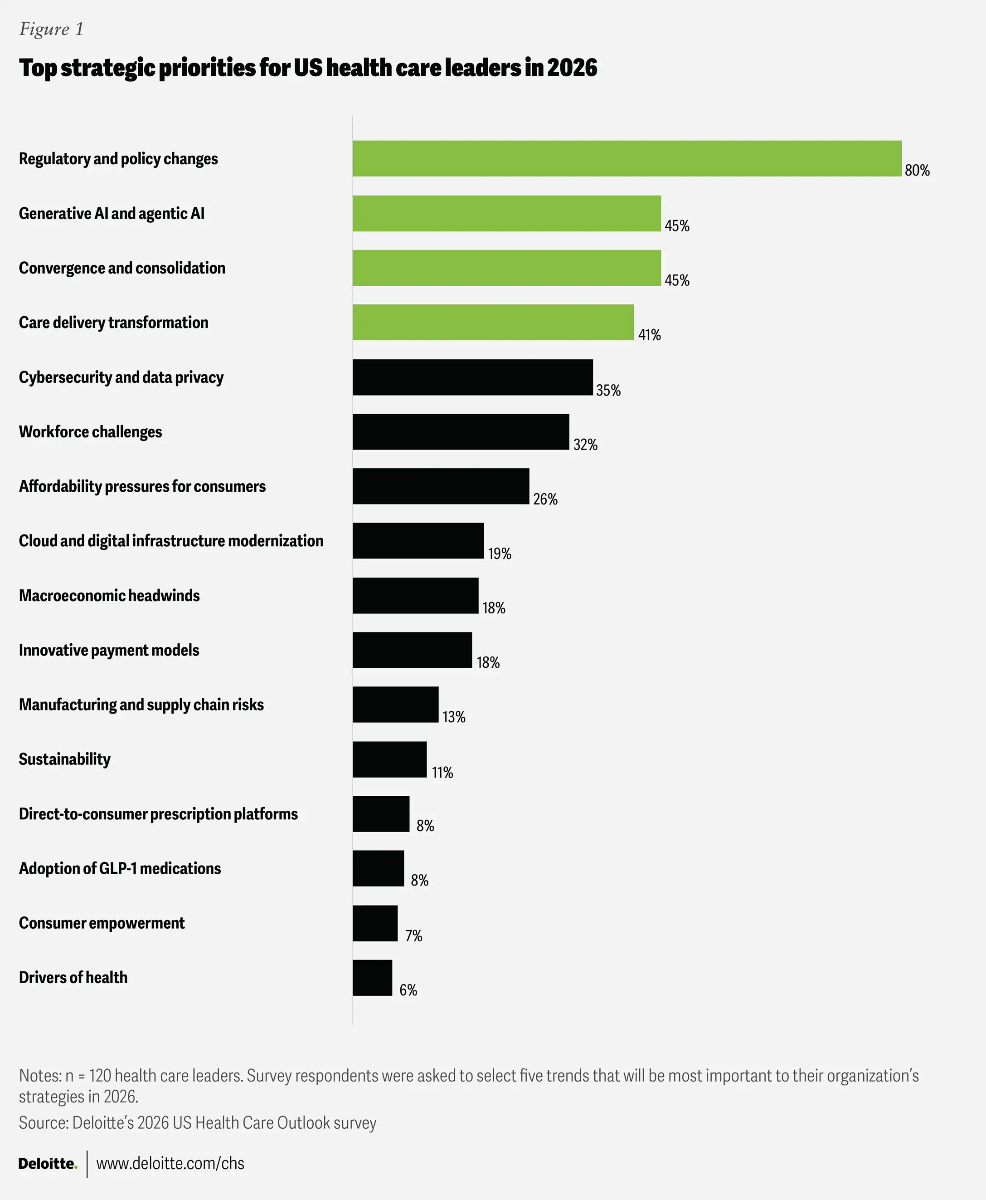
A 2026 survey reveals that 80% of healthcare leaders rank regulatory and policy changes as their top priority, followed closely by generative and agentic AI at 45%.
Photo Credit: Deloitte
The Congressional Budget Office projected that federal spending on major health care programs will continue growing over the next three decades as the population ages and health care costs rise.
According to the agency's long-term budget outlook, spending on Medicare, Medicaid, the Children's Health Insurance Program, and Affordable Care Act marketplace subsidies is expected to consume an increasing share of the federal budget, driven largely by the growing number of older Americans and higher health care expenditures per person.
Those projections reflect a demographic trend already underway.
According to the American Hospital Association's 2026 Environmental Scan, adults age 65 and older now number more than 61 million, making them the fastest-growing age group in the United States.
By 2050, nearly 23% of the nation's population is projected to be older than 65, creating greater demand for medical services, long-term care, and chronic disease management.
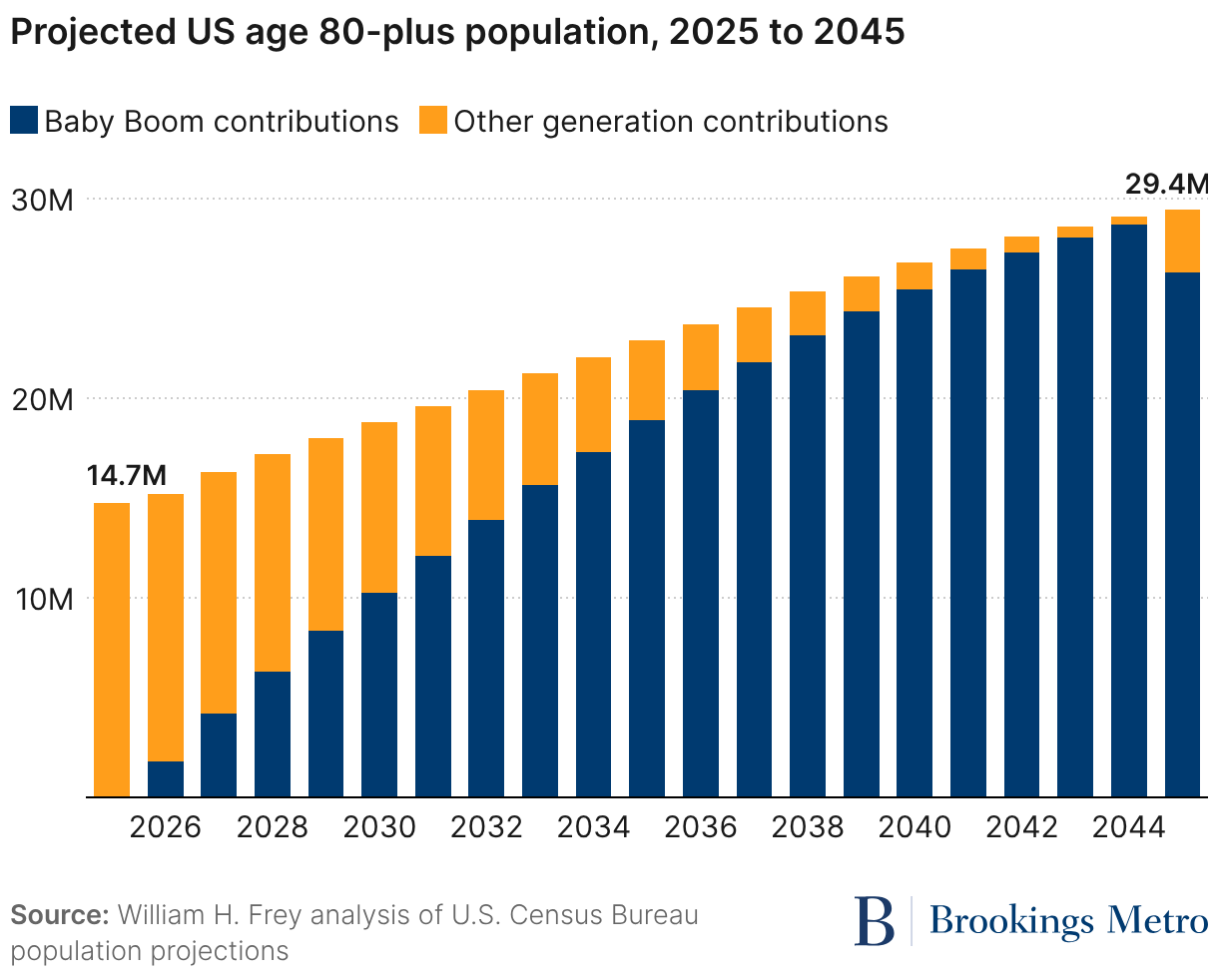
Fueled primarily by Baby Boom generations, the U.S. population aged 80 and older is projected to double from 14.7 million in 2025 to 29.4 million by 2045.
Photo Credit: Brookings Institution
At the same time, the report found that patient expectations continue to evolve across generations.
While older adults are expected to require more frequent and complex care, younger generations increasingly prioritize convenience, digital access, and preventive services. Online appointment scheduling, virtual visits, digital communication with providers, and personalized care have become increasingly important as hospitals compete to meet changing consumer expectations.
Hospitals have responded by expanding services beyond traditional clinical settings.
The American Hospital Association reported that many health systems are incorporating age-friendly care principles, integrating behavioral health into primary care, expanding preventive services, and strengthening partnerships that address social drivers of health, including transportation, housing, and food security. Providers have also continued investing in telehealth and other digital tools designed to improve access for patients regardless of where they live.
Those operational changes come as affordability remains a challenge for many Americans.
According to the American Hospital Association, nearly half of U.S. adults reported difficulty affording health care. The Commonwealth Fund's 2026 State Health Disparities Report found that financial barriers, access to care, and health outcomes continue to vary significantly across states and demographic groups despite ongoing efforts to improve health equity.
The Commonwealth Fund reported that many disparities persist among racial and ethnic populations, as well as among people with lower incomes and those living in rural communities.
Differences in access to primary care, insurance coverage, maternal health outcomes, chronic disease rates, and preventable hospitalizations continued to contribute to unequal health outcomes across the country.
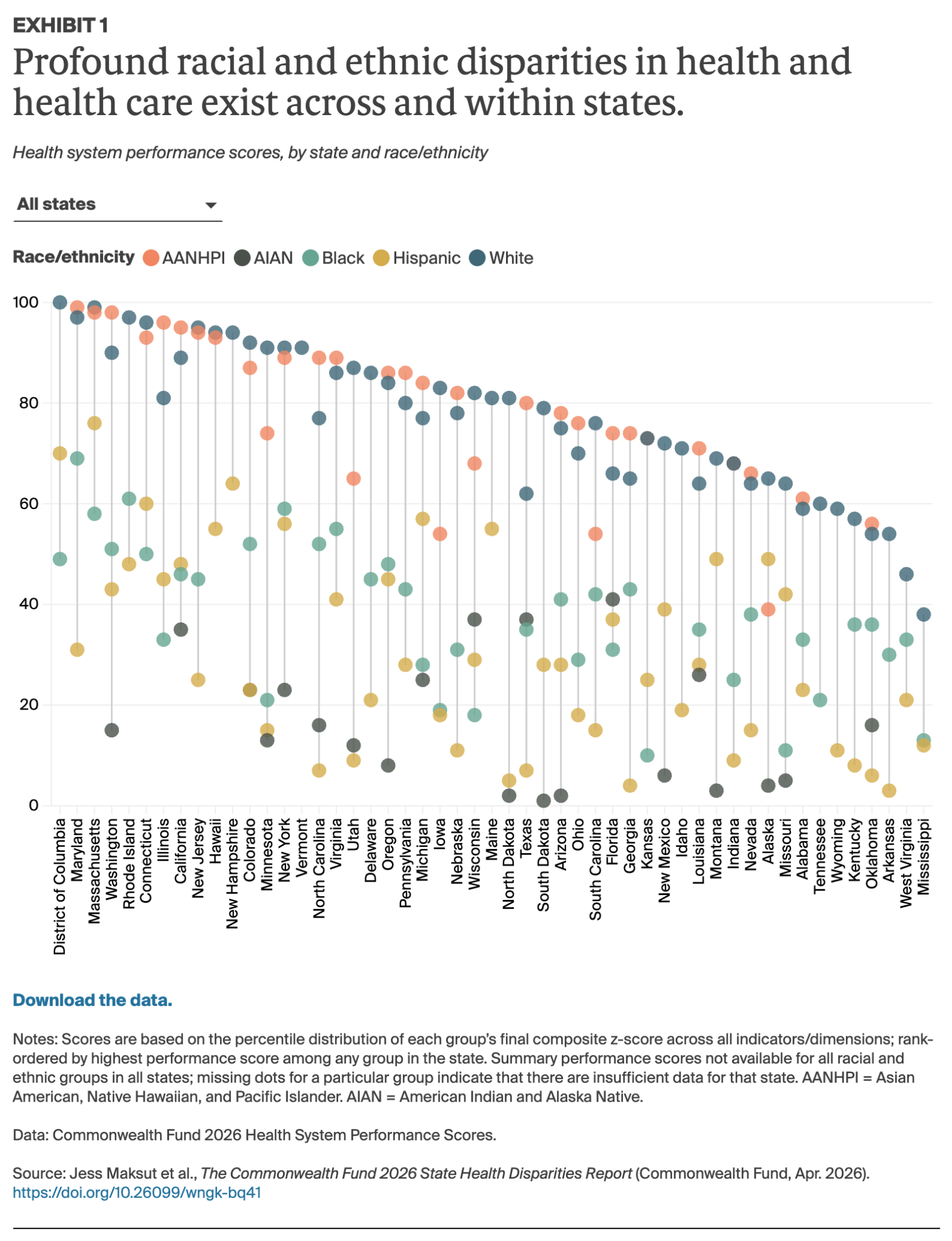
The 2026 State Health Disparities Report shows severe gaps across regions; for example, health system performance scores for Hispanic and Black cohorts routinely fall below 40 in states like Texas and Indiana, while White cohorts in those same states score above 60.
Photo Credit: Commonwealth Fund
The report also found that state policies played a significant role in shaping health outcomes. States that expanded health coverage, invested in preventive care, and strengthened public health infrastructure generally performed better across multiple health indicators than states with more limited access to care.
The growing demand for health care has prompted policymakers, providers, and researchers to examine not only how care is delivered but also how it is financed.
The Congressional Budget Office noted that federal health care spending is expected to increase steadily over the coming decades, reflecting both demographic changes and rising medical costs. Those projections underscore broader discussions among lawmakers about the long-term sustainability of Medicare and Medicaid while balancing access to care for millions of Americans.
The increasing demand for services has also brought greater attention to healthy aging and chronic disease prevention. Similar themes appeared in OpGov.News' "San Ramon Stands for Alzheimer's & Brain Awareness This June,” written by Kathleen Parra, which highlighted community efforts to raise awareness of Alzheimer's disease and promote brain health as the nation's older adult population continues to grow.
Although each report examined a different aspect of the health care system, together they pointed to the same overarching trend: demand for health care is expected to continue increasing while providers work to improve accessibility, affordability, and patient outcomes.
For hospitals, that has meant balancing investments in technology, workforce development, and community partnerships while adapting to an older population with increasingly complex health needs. For policymakers, it has meant addressing long-term spending projections alongside ongoing efforts to reduce disparities in access and health outcomes.
As the United States continues to experience demographic change over the coming decades, the reports suggest that the intersection of population aging, fiscal pressures, and health equity will remain central to decisions affecting patients, providers, and the broader health care system.
To add to or correct any information in this report, please contact me at victoria.o@lead4earth.org.
Thumbnail Photo Credit: Population Pyramid
0
0

Comments