A Vision of Hope: Recovery, Reentry, and Open Government Reform
I recently met with Co-Managing Editor Angela Underwood and Chirag, the founder of OpGov.ai.
Chirag is running for state assembly and is building OpGov.ai because he believes public systems can be more transparent, more accountable, and more humane.
He offered me something rare: an unedited platform to tell the truth about where I came from, what I’ve lived through, what I have built, and what I am trying to change. This is that introduction.
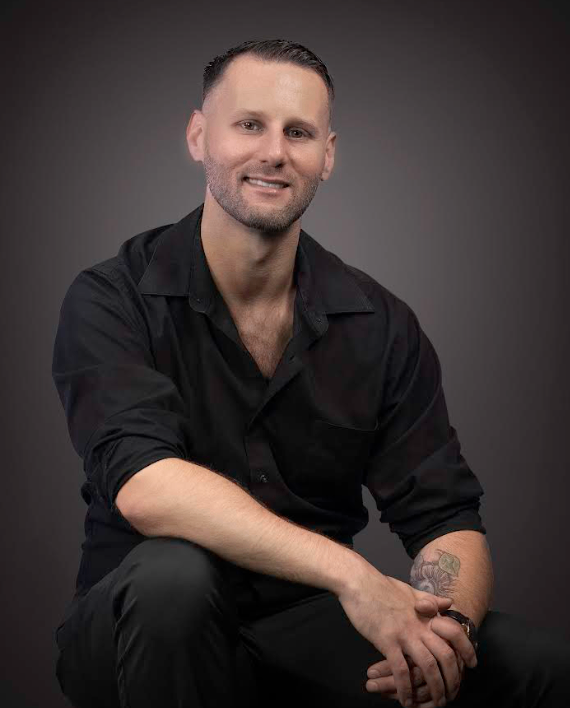
My name is Andrew Drasen. I am the author of A Vision of Hope: A Story of Redemption and Purpose, and the founder of ReturnPath, a structured curriculum built for reentry organizations, recovery groups, sober living houses, and community nonprofits.
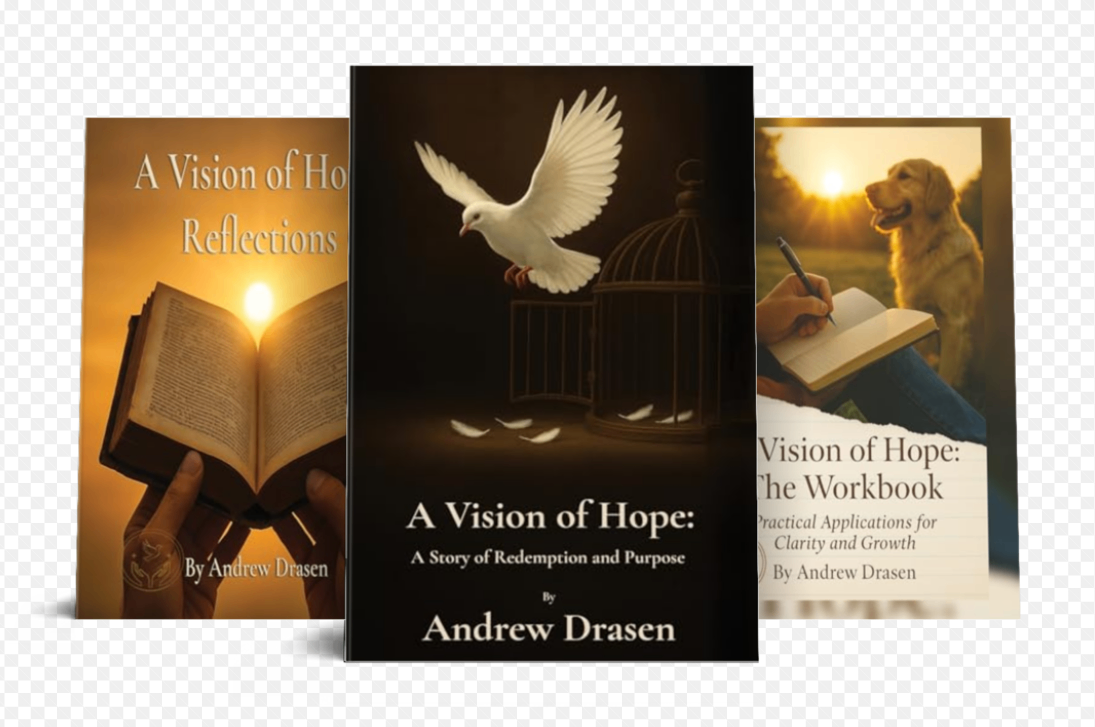
The short version is simple. I lost years to addiction and incarceration, rebuilt my life through recovery and faith, and now I spend my time turning pain into practical tools that help people heal.
The long version matters because systems do not change when we keep stories clean and comfortable.
From addiction to incarceration, and the labels that follow
For a long time, my life ran in a loop. I would try to get clean, try to do the right thing, then fall back into old patterns. Addiction does not just take your health. It takes your decision-making, your relationships, your dignity, and eventually your freedom.
When the legal system gets involved, it adds a different kind of weight. You stop being a person with a story and become a file with a number. And once you have been processed, the world starts using permanent labels like felon, offender, convict, addict, and criminal.
Those words do not describe a moment. They try to define a life.
I know what it is like to have doors close because of a past you cannot erase. Treatment can be lifesaving, but the systems around addiction and mental health are too often inconsistent, under-resourced, and built to manage risk instead of build people.
That disconnect is one reason I care about open government reform. When the public cannot see how decisions are made, how programs are funded, what outcomes are tracked, and what incentives are driving policy, broken cycles repeat quietly. The people who pay the price are the people with the least power to complain.
Where the story changed
My turning point did not happen in a clean movie moment. It came through small decisions made again and again, when nobody was watching.
During incarceration, I had time to confront the wreckage. I also had time to read, to think, and to write. Writing became the first place I could tell the truth without performing. It became a way to untangle what happened, what I did, what was done to me, and what I needed to change if I wanted a different future.
That work became A Vision of Hope.
I wrote it to be honest about addiction, recovery, and what happens when pain is ignored until it turns into self-destruction. I wrote it because I believe we all have something to recover from, whether it is problematic substance use, trauma, mental illness, destructive habits, shame, or the quiet hopelessness that makes people give up on themselves.
It is a memoir, but it is also a blueprint: how a life gets dismantled, and how it can be rebuilt with purpose.
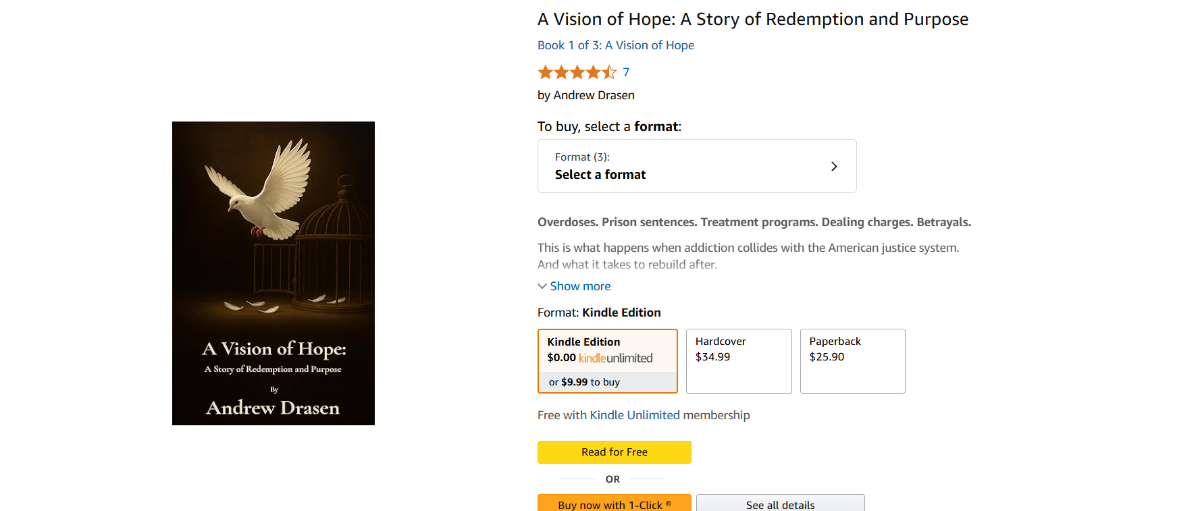
If you want to start with the story, you can find the memoir and companion books at A Vision of Hope.
What happened after release: rebuilding life step by step
After my release, I rebuilt my life step by step.
I worked in car sales for four years. I later ventured into entrepreneurship, including founding a solar sales organization. I worked in business development. I also dabbled in vibe-coding automation because I have seen how systems can either create momentum or create failure.
Recovery is not only a spiritual decision. It is also a systems problem.
People relapse when their environment, routines, and resources do not support change. People return to prison when reentry is a maze with no map: unstable housing, blocked employment, delayed treatment access, confusing requirements, and shame running in the background.
Personal responsibility matters. Accountability matters. But if you put someone into a structure designed to fail, you should not act surprised when they do.
Caroline, and the moment purpose got sharper
There is another turning point that shaped everything that came after, and it is the hardest part to write about.
I was engaged to Caroline. We shared years of love, struggle, recovery, and resilience. We built a home. We raised our dog, Eeva. We walked through relapse and healing.
Caroline died by suicide in 2025 after a long battle with bipolar disorder and major depression.
Even though she is not mentioned directly in my memoir, her love, and our shared years of healing and faith, are woven through its pages. Her loss did not just break my heart. It changed my definition of responsibility. It made my mission feel urgent.
Now, I am stepping back into the community with more clarity, because preventable loss becomes normal when systems are allowed to stay broken.
A Vision of Hope, the companion books, and what they are designed to do
A Vision of Hope: A Story of Redemption and Purpose is the foundation, but it is not the end of the work.
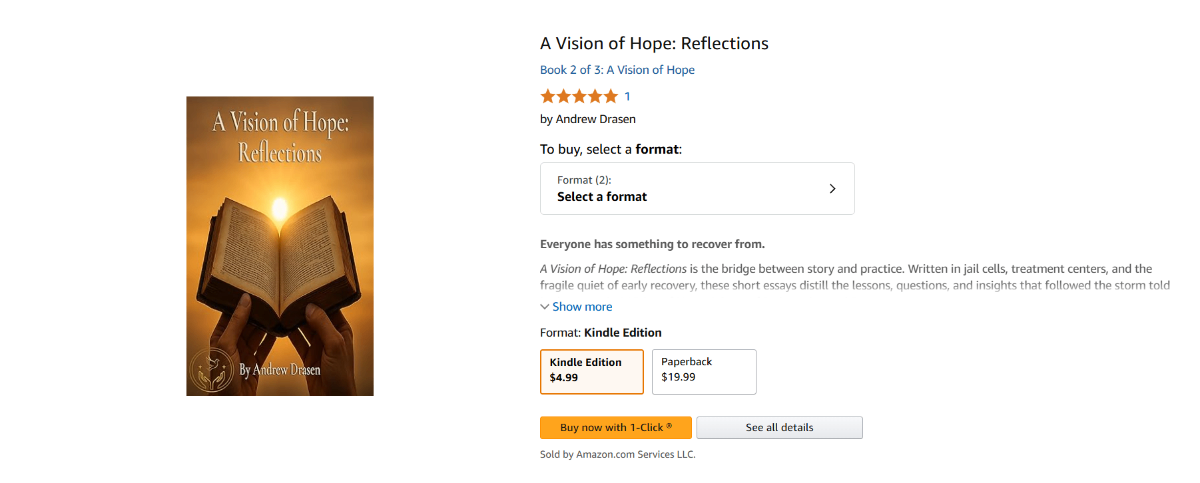
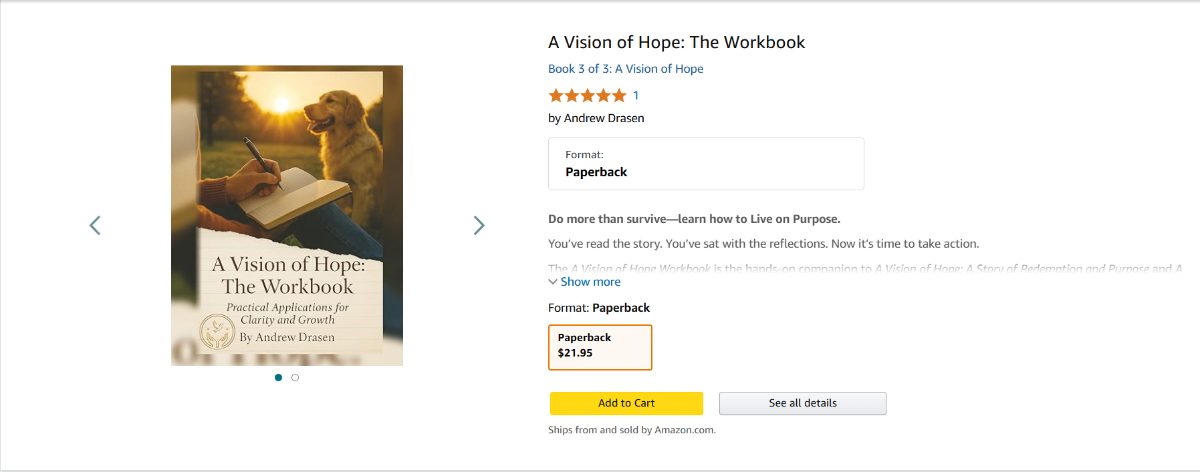
I also created two companion books: A Vision of Hope: Reflections and A Vision of Hope: The Workbook. The goal is to turn insight into action. Not inspiration that fades after a good day, but practices that hold up on hard days.
Together, the memoir and companion books map out the internal side of change: honesty, accountability, faith, habit change, identity rebuilding, emotional regulation, and learning how to sit with pain without trying to escape it.
ReturnPath: a structured recovery and reentry curriculum for organizations
ReturnPath is the structured curriculum I have been building for the people doing the work on the ground: reentry organizations, recovery groups, sober living homes, community nonprofits, and programs that need something more reliable than good intentions.
ReturnPath is built for returning citizens who want a real plan, not a motivational poster. It is built for people coming out of addiction, incarceration, or both. People who need practical tools for daily living, long-term stability, and measurable progress.
It is also built for the families and staff supporting them, because support without structure becomes burnout, and structure without compassion becomes control.
At its core, ReturnPath is about making the next right step easier to see and easier to take, without removing accountability. Not by lowering the bar, but by making growth repeatable.
A strong reentry curriculum does not just feel helpful. It produces outcomes.
Why Opengov.ai, and why open government matters to recovery and reentry
You might be wondering why this story belongs on Opengov.ai.
Here is why: addiction recovery, mental health, and criminal justice reform are not just personal issues. They are public systems issues.
Budgets, policies, court practices, treatment availability, reentry support, probation rules, employment barriers, and housing access all intersect with whether someone makes it or breaks again.
Open government reform makes real reform possible because it makes reality visible.
If a county says it prioritizes treatment, the public should be able to see where the funding goes, what outcomes are being measured, and whether the approach reduces relapse and recidivism.
If leaders say they want safer communities, we should be able to compare the cost and impact of incarceration versus prevention, treatment, restorative practices, and reentry support.
Transparency is not a vibe. It is infrastructure.
My political lens: the war on drugs, drug legalization, and outcomes-based fiscal policy
I am not interested in politics as a sport. I am interested in outcomes.
That is why one of the first deep dives I am publishing on my own blog is a series on drug legalization, regulation, and the war on drugs.
The war on drugs is not abstract to me. It is the backdrop of my life. It is a set of incentives and laws that shaped how addiction was treated, how punishment replaced treatment, and how enormous public resources were poured into approaches that often produce terrible results.
This series is the first of several in-depth dives into issues that matter, because if we want smarter laws and better systems, we need to do more than argue. We need to examine what we are funding, what outcomes we are getting, and whether the current approach is worth the cost.
Drug policy is one of the clearest examples of why fiscal policy cannot be separated from human policy.
When states and counties spend heavily on enforcement and incarceration, that money is not available for prevention, mental health services, community-based treatment, recovery housing, workforce support, and reentry programs that reduce relapse and recidivism.
Whether someone supports full legalization, partial legalization, decriminalization, or a different approach entirely, the core question is the same: what produces better outcomes at a sustainable cost?
That is the lens I am bringing to the conversation: accountability, transparency, and results, plus a reallocation of funds into more effective options with better outcomes.
Speaking to at-risk students: telling the truth early
One of the most important parts of my work is speaking directly with at-risk students.
I do it because I wish someone had spoken to me with honesty and clarity when I was young. Not fear-based lectures, and not soft advice. Real talk about what addiction costs, how quickly experimenting becomes dependency, and how choices compound until you cannot recognize yourself.
But I also speak to students about hope and agency. About learning to lead your own life before your environment leads it for you. About building self-respect through discipline. About faith, and the difference between guilt that crushes you and conviction that changes you.
If we want fewer people entering the system, we must start upstream. Prevention is not just education. It is connection, belonging, and teaching people how to cope before they self-medicate.
This summer: reintegration, service, and doing the work in public
Over the coming months, I am leaning hard into reintegration: showing up in the community again in a more public way.
Some of that is speaking in schools, recovery spaces, and community rooms where the conversation is raw and real. Some of it is meeting with organizations that serve returning citizens and people in early recovery, programs that want structure, measurable progress, and a curriculum they can actually implement.
I am also taking meetings with civic leaders and reform-minded builders who care about transparency and outcomes. This is not just about my story. It is about how many stories are being manufactured by broken incentives right now.
GAB2026, and the work in public
In 2026, I will be delivering a virtual oral presentation at GAB2026. I want this mission to be tested, shared, challenged, and improved in public, because that is how real programs get stronger.
My mission, plainly
My mission is simple, but it is not easy.
I help people recover, rebuild, and live with purpose.
I help families find tools that work, not just advice that sounds good.
I challenge systems that fail people with addiction and mental illness.
I build resources that turn second chances into lasting change.
I believe faith and fear cannot live in the same place. I believe the future can be better than the past, but only if we are willing to tell the truth about what is broken and do the work to rebuild it.
If you are here because you care about open government, public systems, and accountability, I invite you to read my story through that lens.
If you lead a reentry organization, recovery group, sober living program, or community nonprofit, and you want to explore ReturnPath, I would love to connect.
Learn more about A Vision of Hope, the companion books, ReturnPath, and my current writing projects at avisionofhopebook.com, or reach out directly at andrew@avisionofhopebook.com.
1
0

Comments