(OPGOV GLOBAL) - Along the arid coast of Peru, where desert plains meet the foothills of the Andes Mountains, lie the remains of Caral-Supe—described by UNESCO as “the oldest centre of civilization in the Americas.”
Discovered in 1994, Caral-Supe rocked the historical community, pushing back the timeline of complex society in the Americas by nearly a millennium, reshaping archaeological understanding of early urban development in the Western Hemisphere. As pointed out by Smithsonian, Caral-Supe may also be “one of the most ancient [urban centers] in all the world.”
Emerging around 3000 BCE in the Supe Valley, the Caral people lived on marine life and agriculture, building monumental architecture like pyramids at around the same time as Ancient Egypt. Once an ancient metropolis, Caral-Supe held cultural influence extending into parts of Ecuador, until it was forgotten and swallowed by mother nature like many of its societal contemporaries.
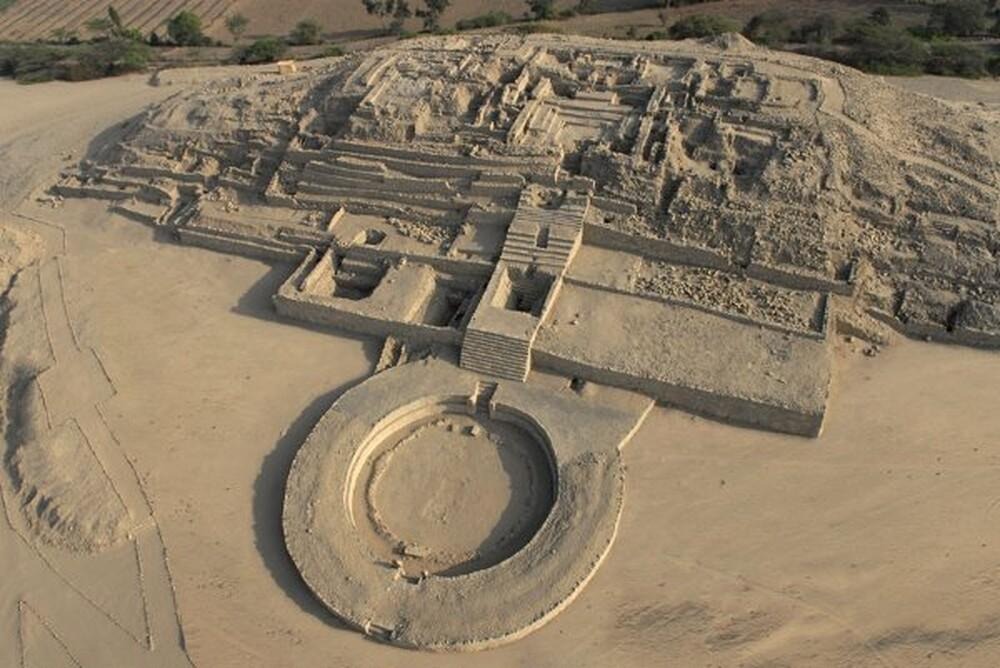
Bird’s eye view of the ruins of Caral-Supe. Image Source: © Christopher Kleihege via UNESCO
Between about 2200 and 1900 BCE a major climatic disruption known as the 4.2 kiloyear (4.2ka) event devastated large parts of the world. Paleoclimate evidence from ice cores, lake sediments, and marine records indicates prolonged drought across the Americas, Africa, Asia, and the Middle East, contributing to widespread social and economic upheaval.
As Nature reports, “People abandoned thriving cities in Mesopotamia, the Indus Valley and farther afield at about the same time,” with soil layers in modern Syria “so barren there was hardly any evidence of earthworms.” The peer-reviewed Quaternary International reiterates this, adding that in China “nearly all of the well-developed Neolithic cultures” suffered “derailment.”
To be sure, the 4.2ka event aligns with the collapse of many early civilizations. Egypt’s Old Kingdom fell into instability, the Akkadian Empire disintegrated, and urban centers in the Indus Valley were gradually abandoned or reorganized. While political and economic factors also played significant roles, environmental stress is considered by many experts to be a major contributing driver.
Evidence from coastal Peru suggests Caral-Supe was also afflicted by shifting climatic conditions. As water availability declined in river valleys that sustained agriculture, the city declined and was abandoned by about 1800 BCE.
But in the Americas, Caral-Supe was not an isolated incident, nor was the 4.2 kiloyear event the only climate disruption to coincide with the collapse of civilizations. About two millennia later in modern Guatemala the Mayan city of Tikal echoed the same fate.
By 700 CE Tikal was “the most fantastic city in the Maya world” boasting a population of up to 100,000 people. While it formed part of one of the most advanced civilizations in the Americas by about 870 CE Tikal was lost to the ages and reclaimed by the jungle. Modern LiDAR surveys have since revealed extensive road systems, interconnected settlements, and large-scale urban planning across the Maya lowlands. This is indicative of a far more complex and integrated civilization than once understood.
According to NASA and the University of Cincinnati the fall of Tikal involved human manufactured drought through deforestation for farming and living space. NASA ominously warns that “Central America might become warmer and drier again” if the remaining forests on the “Yucatan Peninsula…were cut down.”
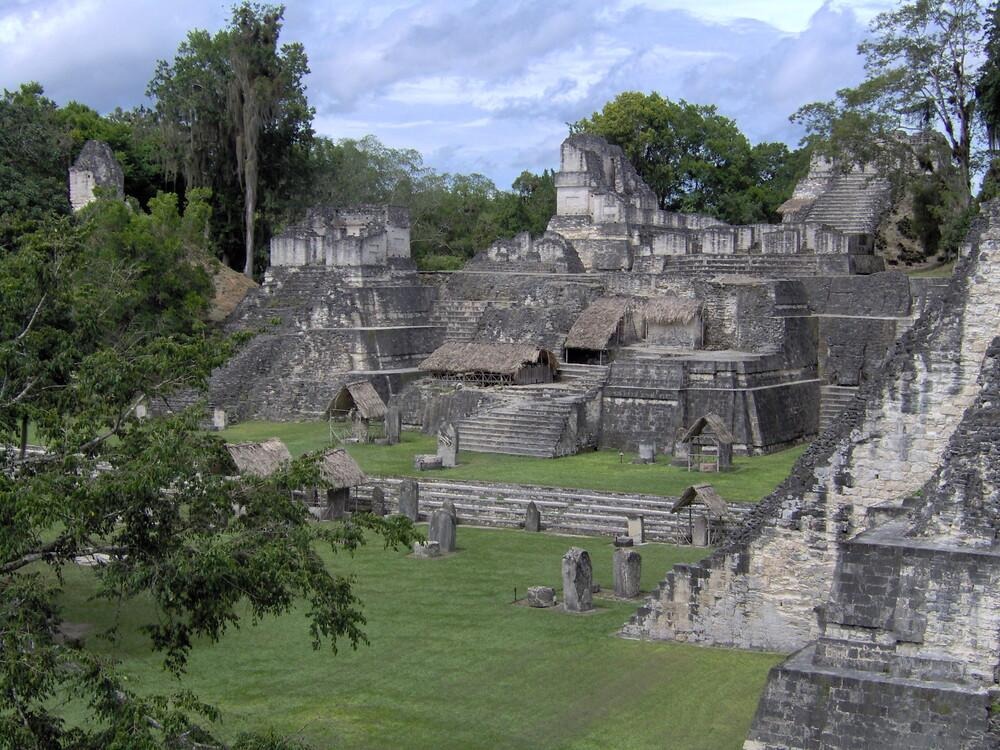
Tikal National Park (Guatemala). Image Source: © Lionel Lalaité via UNESCO
As a whole the decline of Caral-Supe and other ancient civilizations illustrates a recurring pattern: complex societies are deeply dependent on environmental stability. In at least in the case of Tikal it also demonstrates that human environmental choices can contribute to the decline of civilizations.
While modern societies confront accelerating climate change public discourse is fueled by conversations about deforestation, drought, and melting glaciers. In this light, the stories of our collective past and the lessons they teach carry renewed relevance. Unlike earlier civilizations, humanity now possesses far greater technological capacity, scientific understanding, and global interconnection—but it also has far greater population density and systemic complexity.
Nonetheless, the fundamental challenge remains. How societies respond to environmental stress determines whether they adapt, transform, or fracture. What is the choice of modernity? The ruins of Caral-Supe and Tikal and the worm-less soil of Syria do not offer simple parallels to the present, but they do offer a durable lesson:
Climate has always shaped human history, and ignoring its pressures has rarely come without consequence.
To add to or correct any information in this report, please contact me at robert.m@lead4earth.org or leave a comment below with your thoughts.
Cover Image: © Sacred City of Caral-Supe
0
0

Comments