(SAN RAMON) -- Very long meetings.
A pattern OpGov.ai is picking up across the U.S., from the West Coast to the East.
It was evident in last night's San Ramon Council meeting, where Mayor Mark Armstrong and councilmembers went well into the night conducting regular city business. Clocked in at 5:27:50 on the city's YouTube page, the meeting shows two breaks.
Local government meetings, often accompanied by public protest, debate, or sheer disappointment, are getting longer and longer. While the Portland City Council conducts a 10-hour-long meeting, in Oregon, across the country, elected officials in Atlanta hold two nearly six-hour-long meetings back-to-back.
There is something to be said about holding a city meeting for nearly half a day, which is why this reporter began research on the subject, first finding, "Why Do Our Meetings Take So Long?", which blames a lack of a solid policy framework, council motives, and officials and public interaction.
"Result: these meetings are long, results are minimal, and long-term perspectives are frequently absent," according to Carl Neu, Jr, the director of the Center for the Future of Local Governance in Colorado.
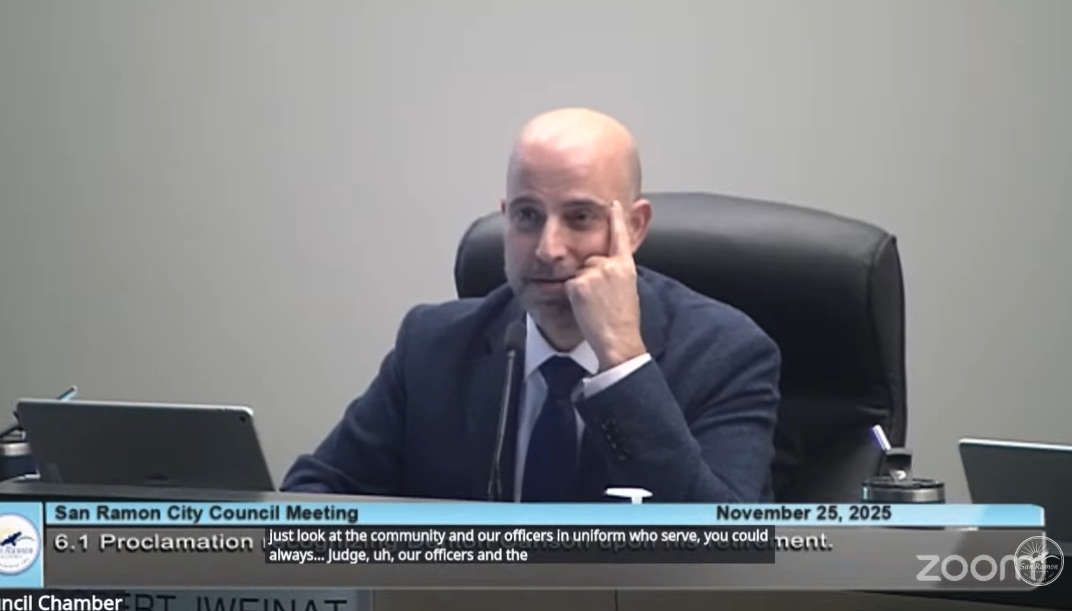
Appears even councilmembers finds themselves tired after hours of late-night city business as seen here with Councilman Robert Jweniat.
"Councils not operating in the proper council arena (venue) or meeting format to set sound policy or make decisions in a reasoned manner" is the second reason.
find themselves tired after hours of late-night city business,
"Council meetings exist for the council to do its business, which is to provide leadership, direction, establish results/ends to be achieved, and pass authorizations through resolutions and ordinances," Neu Jr. writes.
Neu Jr. adds elected officials believe meetings "should be forums of endless collegiality and informality where everyone is allowed to state and profess their views, opinions, and predilections to the point of exhaustion in hopes that a gem of a decision will emerge or specific 'how to' direction will be imposed as the 'popular will' on management."
The last reason is that council members and citizens view the meetings as "community kaffee klatches," consumed by council and citizens engaging in "endless unfocused conversation, feeling this is the way to represent people’s interests or concerns, make decisions, and 'run' the city."
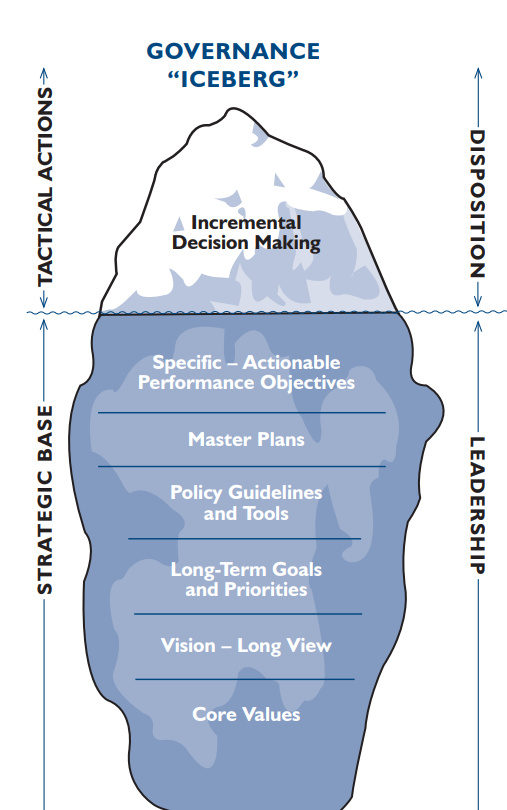
Neu Jr. uses a hierarchy of needs and goals, showing a "Governance Iceberg" of sorts, seen below, which breaks down incremental decision-making that must have core values as the foundation.
Reporter Emily Schenry also points out the pattern, in "Are local government and school board meetings getting too long? Some say limits needed."
Calling meetings, "democracy in play," the Herald News reporter points out "often notable length of these meetings, and the number of articles up for discussion, could also discourage some people willing to engage civically."
That is not true for everyone.
In San Ramon, former Mayor Greg Carr continues to attend lengthy meetings, expressing his concerns about overdevelopment, public transparency, and more. Carr was present last night, sharing more concerns seen below. He is not the only one. Residents, including Chirag Kathrani, Susan Ferris, and Brian Wallace, also sit through hours of meetings to ensure they can find out exactly what is happening in San Ramon.
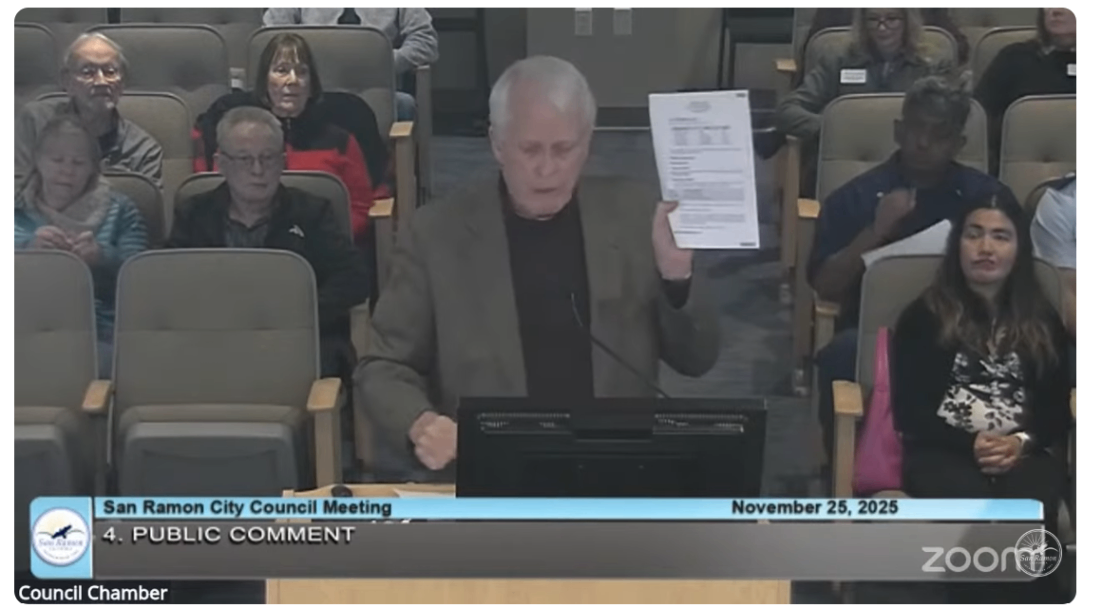
Former Mayor Greg Carr consistently attends long meetings, sharing his concerns
The magazine Western City, specific to California, a column of the Institute of Local Government, reports municipalities claim not only that their complaints of "meetings run very long," and that "as the evening wears on, the tone of the discourse and quality of decision-making decline."
The magazine notes presiding officials must maintain certain skills, including defining the issue and listening to all points of view, while Neu Jr. charts in detail the many aspects of working through government policy. Neu Jr. shows the importance of goal-setting, exploration and analysis, disposition legislation, and community relations.
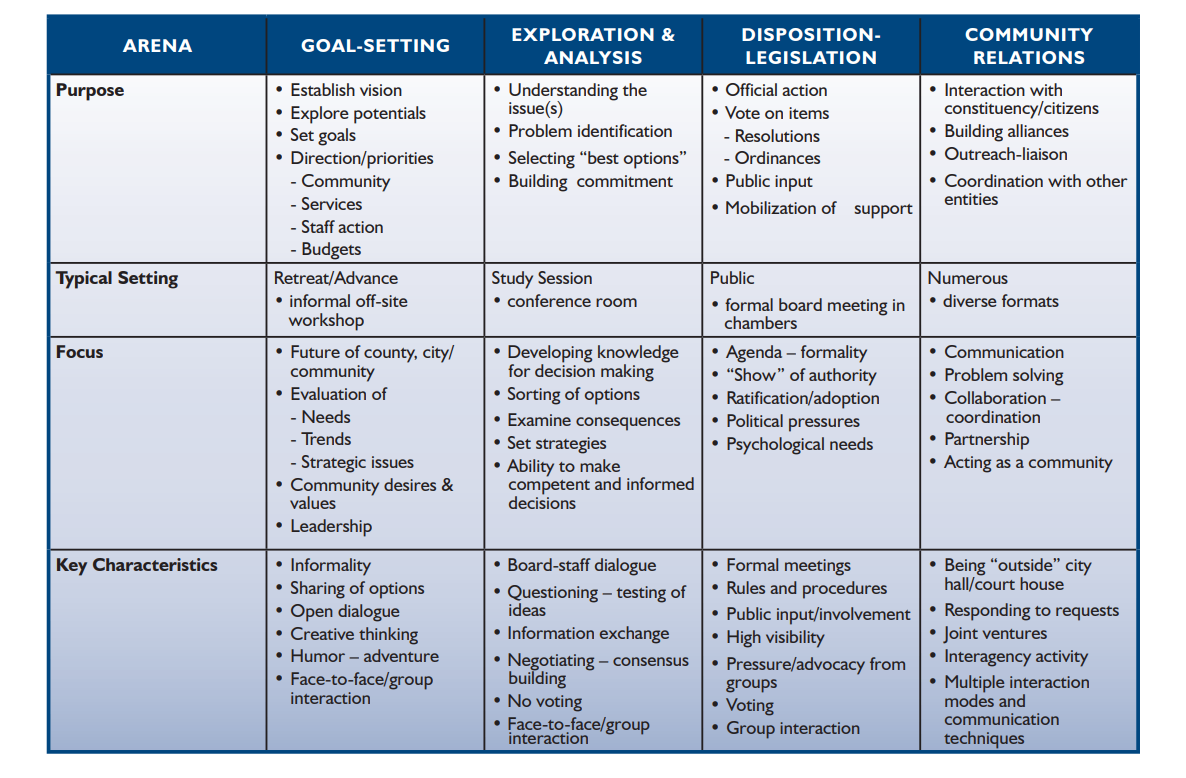
Chart of governmental meeting aspects that should be considered for productive gatherings
"A well-organized agenda, opportunities for public comment, and following protocol among decision-makers are essential to an effective meeting," according to the magazine report. "A successful meeting is one where everyone feels heard, even if the outcome was not the one they wanted."
That is not the case for many San Ramon citizens.
If you have any questions, comments, or would like to add to this report, contact me at reporterangelaunderwood@gmail.com.
1
0

Comments