(DUBLIN, Calif.) — The rules read like a presidential debate: two-minute answers, no notes, no cards, and a hard cut to the microphone of whichever candidate wasn’t speaking. The microphones behaved. The candidates, for long stretches, did not.
In the only scheduled debate of the 14th Congressional District race, Rep. Aisha Wahab and Bay Area Rapid Transit board president Melissa Hernandez spent an hour at the Dublin Holiday Inn agreeing on a surprising amount of policy and disagreeing, loudly, on nearly everything about each other. Hosted by the Dublin Chamber of Commerce and moderated by KPIX 5 anchor Juliet Goodrich, the forum opened with a plea for decorum — the MC even had the crowd raise their phones and switch them off — and closed with one candidate suggesting the other had been in contact with the Taliban.
For a race defined by outside money, the money came up fast.
Pressed on whose donations she would refuse, Hernandez turned the question on Wahab, pointing reporters to her own federal filings and insisting her support comes from “neighbors and friends in the Tri-Valley.” Then the jab: “I have not made enemies like my opponent has. And maybe that’s why they have supported my campaign.”
Wahab went straight at Citizens United and what she called dark money with “no paper trail until the end of an election.” She put a number on it, blaming roughly $7 million from the pro-Israel group AIPAC in the August 18 primary, plus another $2 million in June — spending she said propped up Hernandez after early polling showed Wahab leading the field. Asked directly whether any industry’s money she’d refuse outright, she pivoted to campaign-finance reform and her range of endorsements, “law enforcement as well as… extreme progressives like Bernie Sanders.”
Hernandez wasn’t satisfied. “It’s so funny how this number from AIPAC keeps increasing,” she said, before landing the sharper line: she’d never raised her hand to swear off corporate money, “at least I do not lie about it.” Wahab, she claimed, had taken “hundreds and thousands of corporation money.” Goodrich moved them along.
Public safety got personal
The night’s rawest exchange came over crime. Both women brought grief to the stage. Wahab noted that her father was murdered in New York City when her family first arrived in the U.S., a case still unsolved three decades later. Hernandez leaned on her record running Dublin and BART, where she says she added officers without raising taxes.
Then it curdled. Hernandez accused Wahab, as the state Senate’s public safety chair, of moving to strip 16- and 17-year-olds from a human-trafficking felony bill — only for Gov. Gavin Newsom to restore them. Worse, she said Wahab “walked away when the mother was pleading” in committee about a son lost to fentanyl.
Wahab pushed back hard on process and record. A chair, she said, doesn’t make motions; a colleague did. She rattled off her authorship bona fides: the SB 14 trafficking felony, SB 1414, AB 379, a “safer California” package raising penalties on fentanyl dealers, and an organized-retail-theft law that earned her a national retailers’ “champion” nod. She added that she was the lone no vote when colleagues moved to decriminalize psychedelics. Goodrich cut the back-and-forth before it could run away.
The BART fight nobody could stop
If one subject exposed the daylight between them, it was the transit agency Hernandez leads. She touted a 92% satisfaction rate, new fare gates she says have saved $10 million, falling crime and more officers.
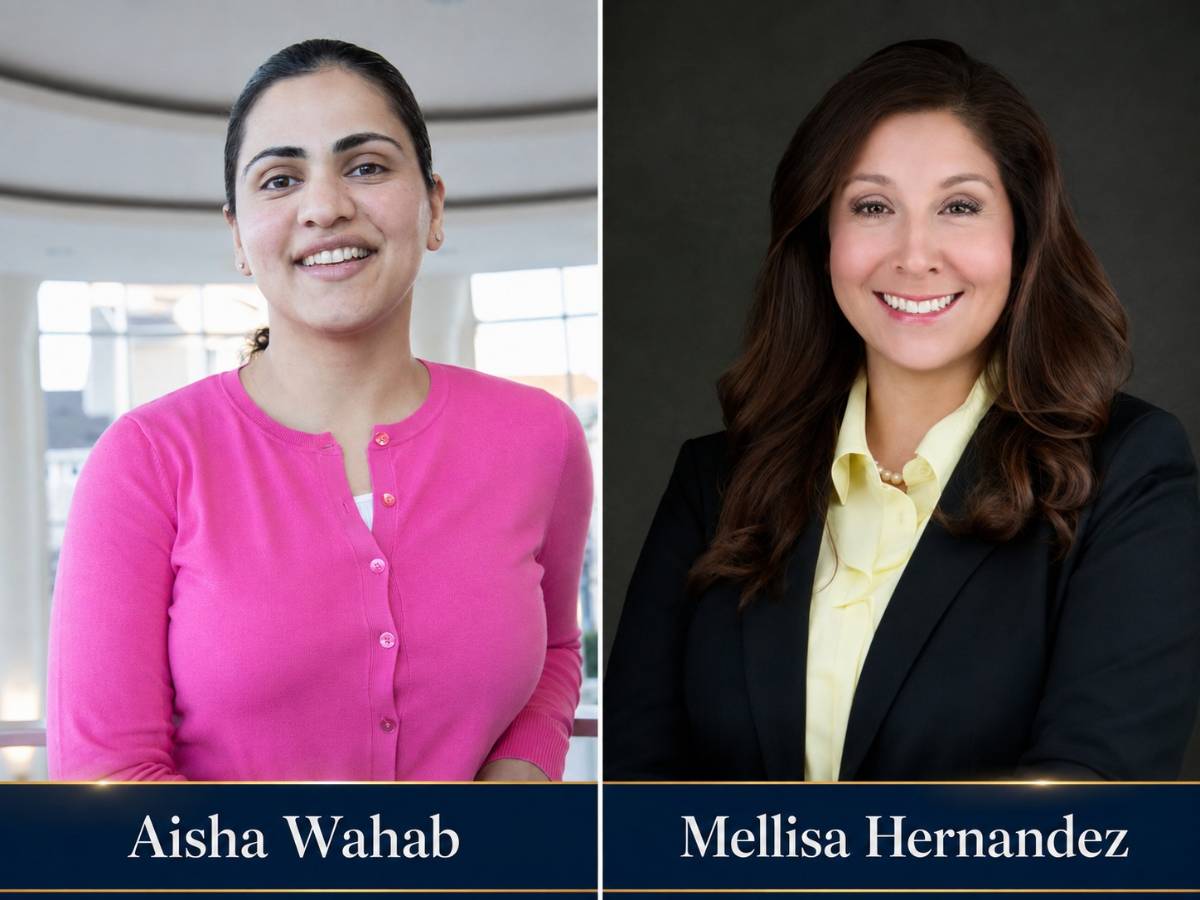
Photo Credit: Google.com
Wahab, who represented more than a million people as a senator, was unimpressed. She described seeing open drug use on BART trains — “literally with a crackpipe” — questioned a satisfaction survey the agency runs on itself, and pointed out that roughly 86,000 daily unique riders is “not even a fraction” of a single Senate district.
Hernandez’s response was the bluntest moment of the night. “When you sit there and say you ride BART continuously, that’s a flat-out lie,” she said. “I was in your office and you sat there and said, ‘I don’t even take public transit.’” Goodrich tried three times to change the subject. “No, no, no,” she finally said. “We’re going to move on from BART.”
Where they mostly agreed
Strip out the elbows, and the two Democrats occupy a lot of the same ground.
Both want a pathway to citizenship, and both ripped into ICE’s tactics — Wahab invoking her Afghan-American roots and work banning masks for agents and guaranteeing due process “for anybody within our borders”; Hernandez recalling the two decades it took her father, a Mexican immigrant, to naturalize. Both named immigration reform or cost-of-living as a top first-year priority. Both said the U.S. should pull back in the Middle East and that Congress, not the president, decides when the country goes to war.
On housing, each offered a version of build-more-plus-down-payment-help. Wahab pointed to the $300 million Dream for All program, a renters’ tax credit for lower earners, and a bipartisan bill to bar private-equity firms from buying single-family homes. Hernandez talked like the former mayor she is, citing a two-acre deal she says yielded 113 units and three apartment buildings the city bought to preserve “missing middle” housing.
On health care, Wahab leaned furthest left, co-sponsoring Medicare for All and crediting herself with capping insulin at $35. Hernandez was warmer to “health care for all” but wanted the tradeoffs studied and the recent federal cuts reversed. On energy, both promised to hold PG&E accountable; on AI and data centers, Wahab opposed a moratorium (“you can’t stop technology”) while Hernandez wanted uniform federal rules and local control over siting, citing neighbors’ frustration that Hayward’s new data center skipped the City Council.
The closing dagger
The coin toss sent Hernandez first. She sold experience over “ideology” — mayor, BART president, a record of “leading and delivering” — and then, in her final seconds, veered personal: she’s honest, she said, and not “having communications with the Taliban like” her opponent.
It was an unsubstantiated parting shot, and it clearly landed. Wahab bristled and signaled she wanted to answer. Goodrich held the line — it was time for Wahab’s own close, not a rebuttal — and the accusation hung there, unanswered.
Wahab used her two minutes to reintroduce herself as “a daughter of this district,” ticking through a marquee endorsement list that runs from Newsom and Sens. Alex Padilla and Adam Schiff to Bernie Sanders and the county sheriff. “You don’t have to agree with my politics,” she said. “You don’t have to agree with my ideology.” Her pitch: she’s already doing the job.
Voters settle it November 3.
0
0

Comments