(PENSACOLA) --- The City of Pensacola Planning Board meeting was contentious to say the least.
Between reviewing a multifamily residential development at 50 South Ninth Avenue and updating the city's Land Development Code (LDC), both officials and the public debated for more than two hours.
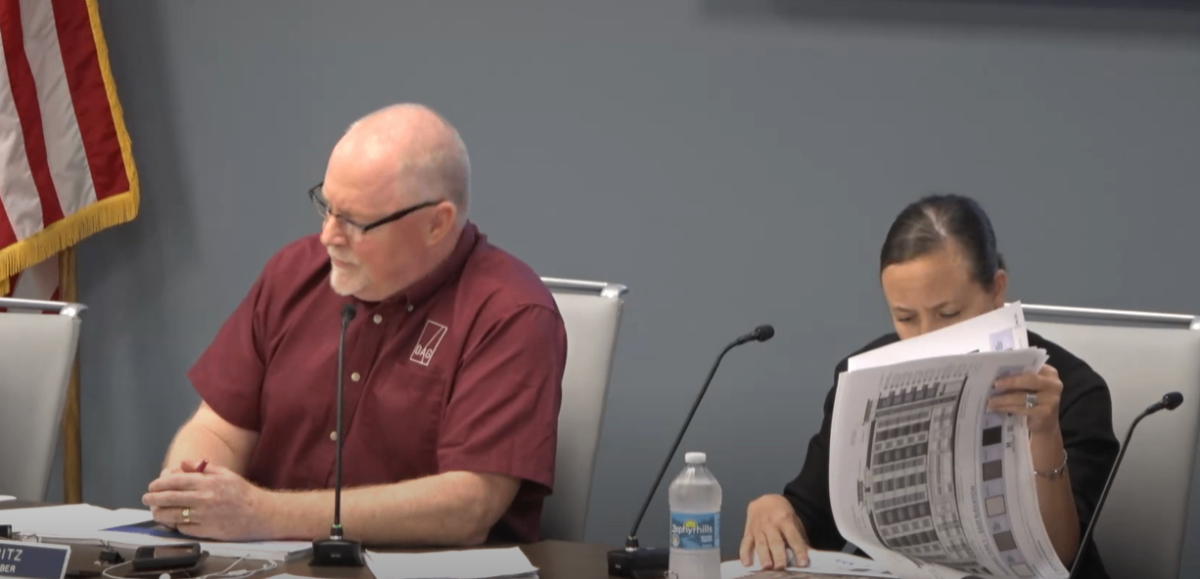
(Photo: Planning Board Members Paul Ritz, left, Bianca Villegas, right, at the April 14 meeting)
The development, criticized for its "utilitarian" 7-story aesthetic, brought critics to the podium beginning with Charles Green, who had issues with increased traffic on Ramona Street, a key connector between Ninth Avenue and Downtown Palafox.
"Now you're adding how many cars to the area, and we are just wondering what is going to be done about that, and are there any steps that will be taken?" Green asked.
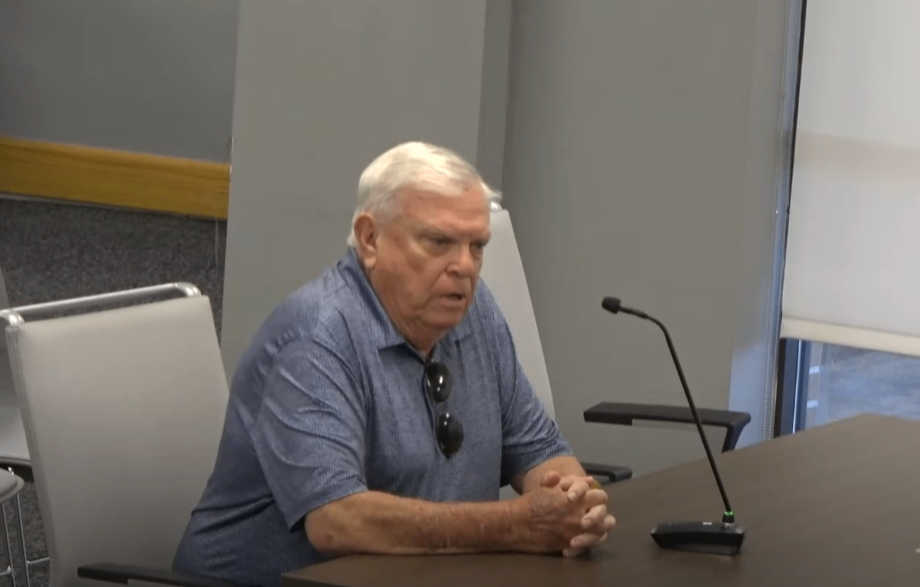
(Photo: Resident Charles Green's concerns about traffic due to a new development were dismissed due to no traffic study performed)
His concerns were dismissed when the board informed him that no traffic study was required and that traffic management falls outside their jurisdiction.
"It is not something we would use as criteria for our board making decisions," Planning Board Member Paul Ritz informed.
T.J. Henriques brought up the issue of aesthetics.
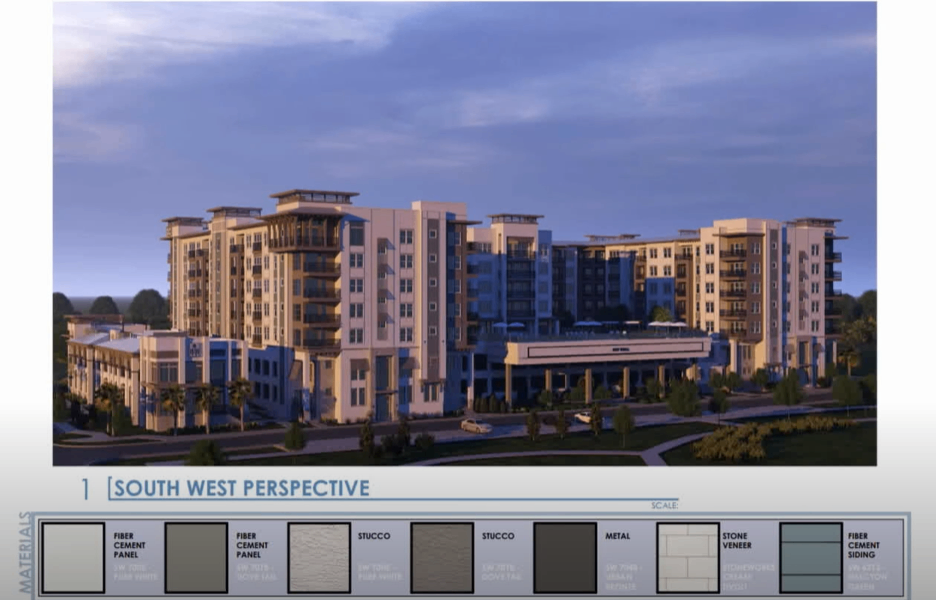
(Photo: Rendering of a proposed 7-story, multi-family complex, which was approved despite resident concerns)
The north and the east side are particularly utilitarian looking and very unattractive, in my opinion," Henriques said, adding, "When I see the picture, it reminds me of when I drive to Destin, and I see that Emerald Grande right as you come over the Destin Bridge, and it just takes up the entire skyline."
Dr. Paul Tamburro brought his own handout and gave it to each official, noting that he is not alone in his objection and was speaking on behalf of the Aragon Homeowners Association.
"This is big picture stuff germane to this property," Tamburro pointed out before claiming that the project violates the Gateway Redevelopment District's code.
"This doesn't pass the sniff test," Tamburro said.
He argued the project likely exceeds the 75% impervious lot coverage limit, fails to maximize bay views and open space, and does not align with the "campus character pattern" intended for coordinated development.
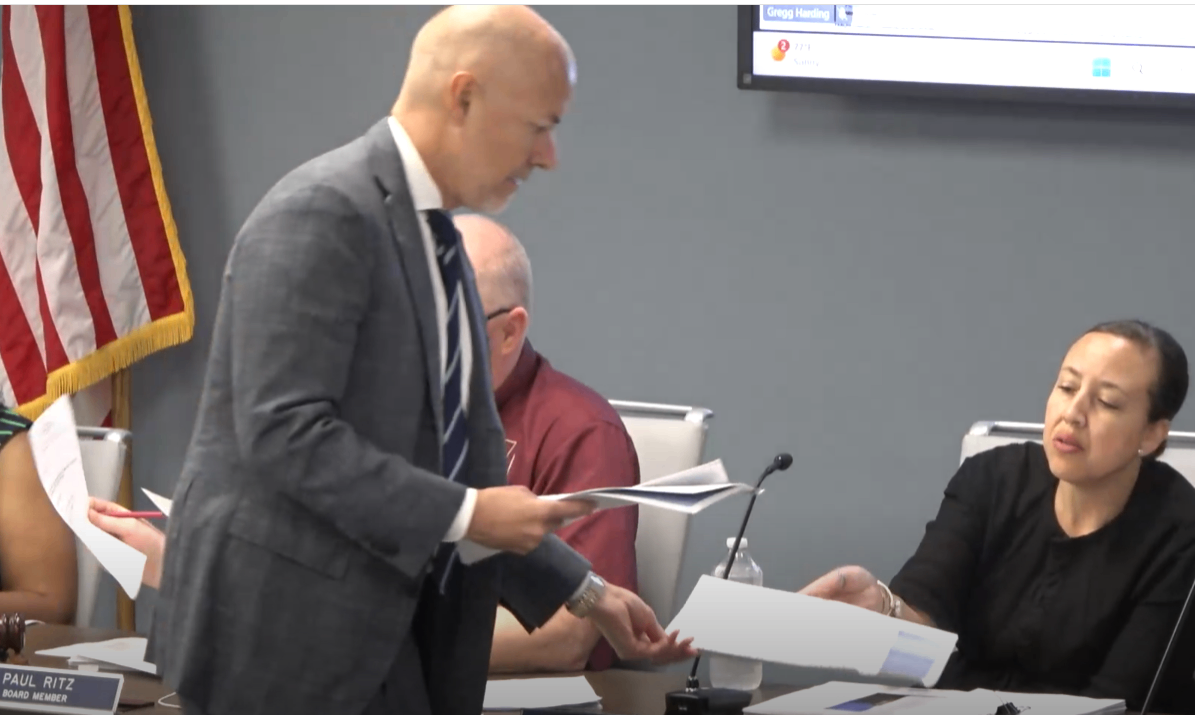
(Photo: Dr. Paul Tamburro hands out his research to Planning Board members regarding a proposed multi-family project)
As for aesthetics, Tamburro criticized the 7-story building, noting that it would dwarf the surrounding structures and fail to complement the historic district.
Not to mention how the bayfront location is jeopardized.
"The placement of buildings, signs, and parking should all maximize preservation of views of the bay and protect the bayfront scenic open space," Tamburro said.
Ultimately, Tamburro made it clear, "I do not see how this planning board can reconcile the aesthetics of this project with the pertinent city code for redevelopment and pass this on as approved."
But they did it anyway.
Next, LDC brought up some issues. Calling herself "late to the party," Nanette Chandler represents petition signers regarding tree protection and stormwater management.
"We understand the necessity for landscaping and trees," Chandler said, adding that stormwater issues are becoming more significant due to the lack of tree protection.
"For example, a mature live oak, 80,000 gallons of water a day, it drinks, so whenever you're removing even one of those trees, that water is now not being removed from the water table. And it's causing a lot more runoff, a lot more flooding throughout the city," Chandler said.
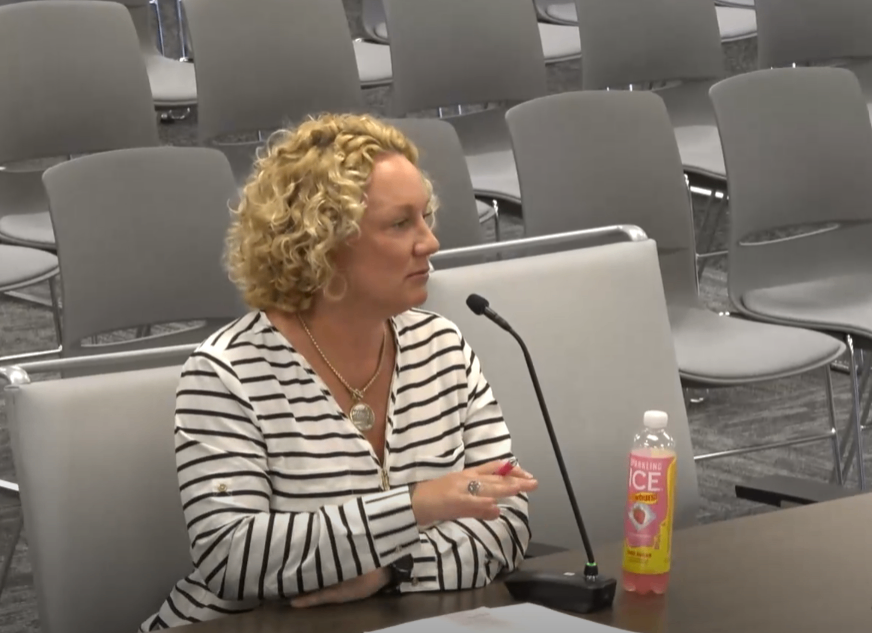
(Photo: Nanette Chandler presents a petition to the City of Pensacola Planning Board regarding tree protection, stormwater management)
Chandler suggested increasing mandatory tree retention from 10% to 25% on developed lots.
"We feel that's a fair number, especially considering these are not forested lots," Chandler said. These are lots where houses have been cleared, and now it's a cleared lot with random trees."
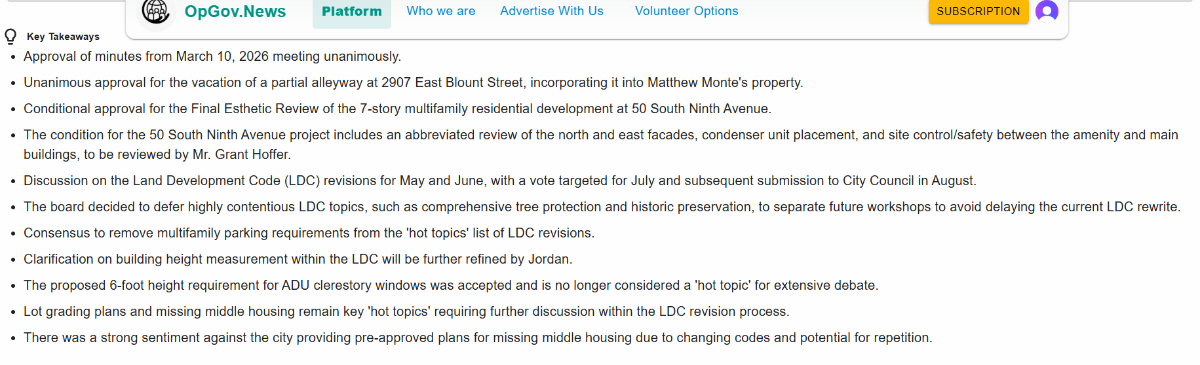
As noted in this media outlet's Key Takeaways, "the board decided to defer highly contentious LDC topics, such as comprehensive tree protection and historic preservation, to separate future workshops to avoid delaying the current LDC rewrite.
0
0

Comments