(SAN RAMON) -- There’s a feeling many San Ramon residents share today, an uneasiness that’s hard to ignore.
What were once open roads and rolling hills have become carved-up hillsides for new subdivisions. A simple 5 p.m. drive now means twenty minutes of stop-and-go traffic. New stoplights appear where the road used to open up. Small local shops disappear under redevelopment plans.
Underneath all of it is a deeper question: Has the public’s voice been lost in the process?
For many longtime residents, San Ramon no longer feels like a city gradually evolving. It feels like a place being rapidly remade around them. Growth is moving quickly, decisions are happening faster, and the public’s role feels smaller than ever. People wonder whether they’re still shaping the city they call home, or simply watching it transform right beneath them.
The signs are visible everywhere: identical Toll Brothers homes replacing open hillsides, apartment buildings squeezed into plazas after long-standing businesses were pushed out, and a slow erosion of the charm that once defined the town. When people lose their place in the process, they lose their connection to the community itself.
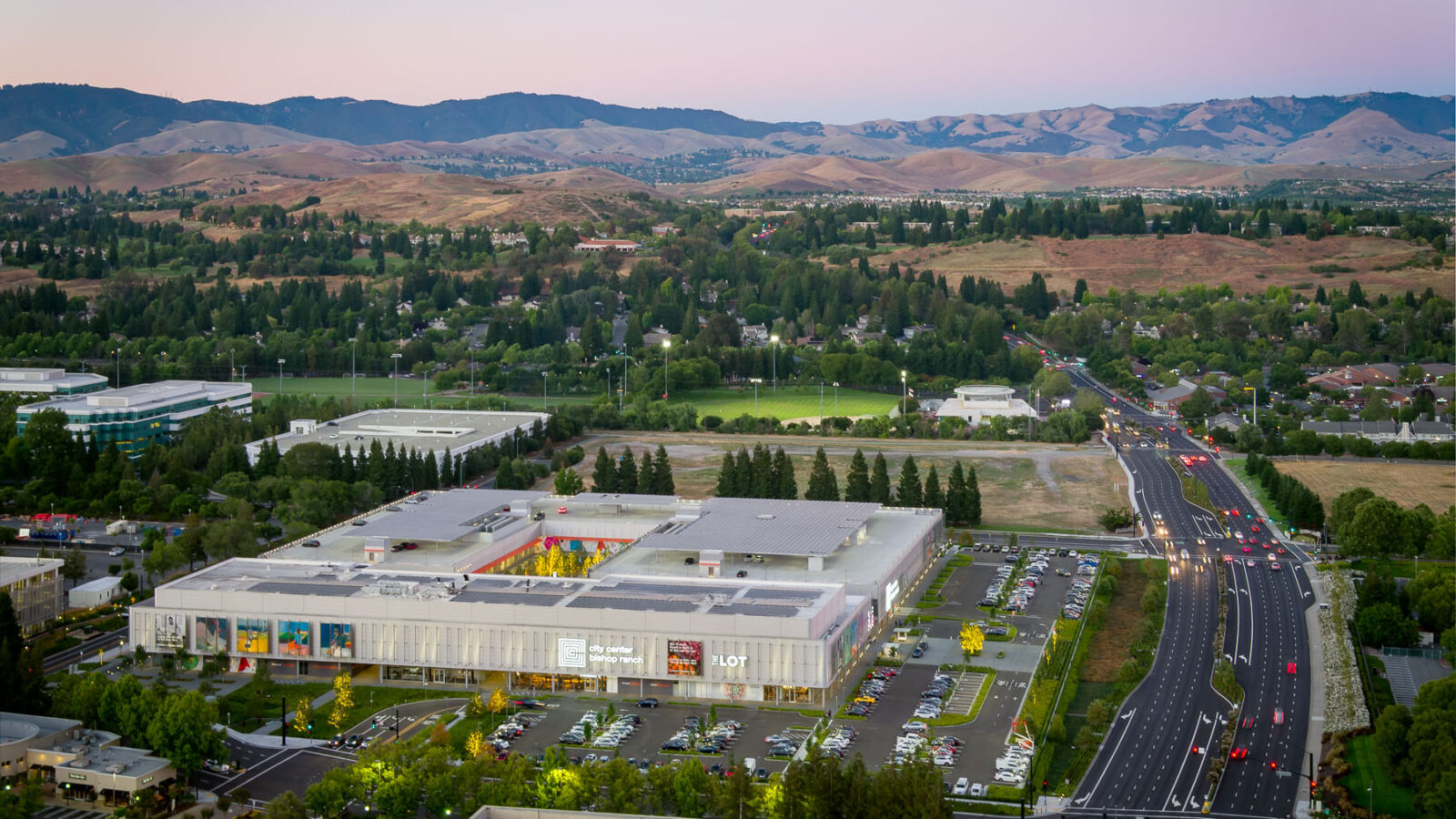
(PHOTO: Plant Construction Company via City of San Ramon)
The General Plan: The Blueprint Behind It All
What many residents don’t know is this rapid expansion was devised and articulated in a long-term document called the General Plan . This plan, updated roughly every 20 years, outlines how the city will handle housing, transportation, parks, open space, and future development. In simple terms, it’s the city’s blueprint for the next two decades.
And almost 25 years ago, residents created legal protections to make sure they had a real say in how that blueprint could be changed.
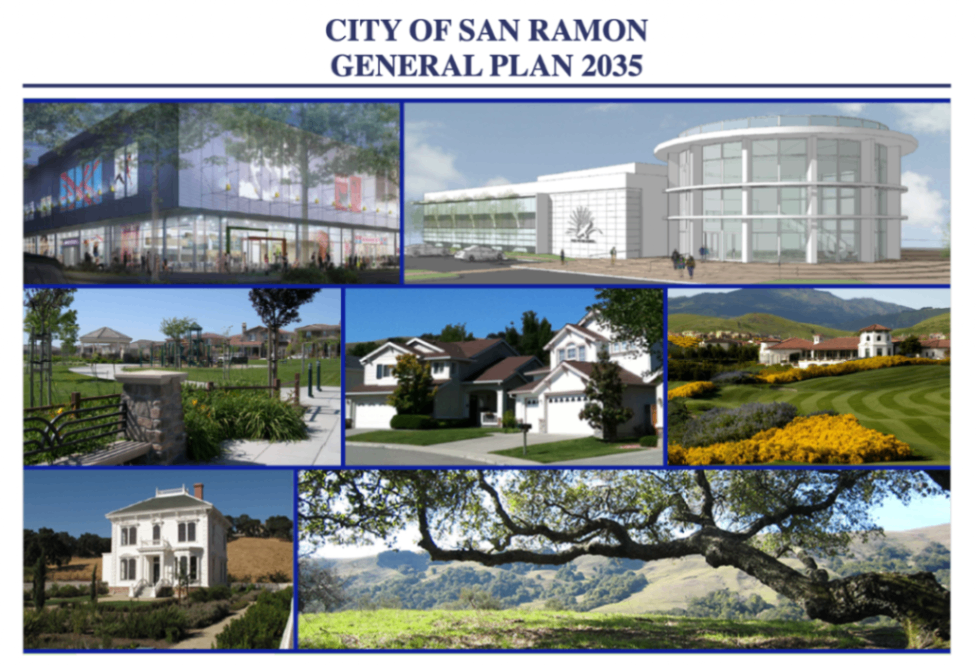
(PHOTO: City of San Ramon)
The Measure Voters Passed to Protect Themselves
This tension between growth and public participation is not new. In fact, it’s exactly why voters passed Measure G in 1999.
Measure G was meant to be a community safeguard: a law written and approved by residents to ensure that growth would happen transparently and with genuine citizen involvement.
It required:
1. A two-year freeze on major General Plan changes.
2. Multiple public hearings for any future amendments.
3. A citizen-run review commission.
4. A supermajority vote (4 out of 5) for General Plan amendments.
The goal was straightforward: slow things down enough that residents could stay involved and informed. In short, Measure G was created to prevent the very feeling many residents express today, that growth is happening faster than they can respond to, and that their input is fading from the process.
But new public records suggest that the protections voters put in place may not have held up over time.
A Measure Built on Voter Authority
When Measure G passed, it was part of a larger regional trend. The late 1990s saw rapid suburban expansion across Contra Costa County. Traffic grew quickly. Sprawl development spread. Many residents felt their local governments were too close to developers and not responsive enough to neighborhoods.
Measure G was the public’s response. It:
1. Paused major General Plan changes for two years
2. Established a resident-led review commission
3. Required a higher vote threshold for any amendment
4. Mandated multiple public hearings
These weren’t suggestions; they were binding legal requirements created through direct democracy. Residents believed they were creating a permanent layer of oversight, one that city leaders couldn’t simply remove later.
Twenty-Five Years Later: A Different Reality
FOIA documents, FOIA meaning Freedom of Information Act, requests that allow the public to obtain government records, paint a different picture today. None of the findings alone suggest a major violation, but together they reflect a slow drift away from Measure G’s foundational principles.
Transparency has eroded with long lists of resident complaints about access to basic documents. One FOIA email said:
“Agenda materials are mislabeled, missing, or provided too late for meaningful public participation” (Personal Communication, FOIA Record, 2025).
Resident Bryan Swanson criticized the city’s handling of public information in a message to officials.

(Excerpt from Personal Communication, FOIA record, 2025)
Others narrate arriving at hearings without enough information about what the city planned to discuss.
Key documents are either missing or hard to access, including attachments that were never included and environmental documents cited in meetings but never posted online for residents to review.
Procedures were compressed or bypassed. Measure G was built on multiple public hearings to slow major amendments. FOIA emails show staff discussing ways to combine hearings or classify large changes as “minor amendments,” a move that shortens the process.
Oversight bodies quietly faded. The resident-led commission required under Measure G has not met in years. One FOIA record stated:
“The city no longer has a Transportation Demand Management Advisory Committee — it was dissolved in 2024” (Personal communication, FOIA record, 2025).
Public participation stalled. Residents write of uncertainty about timelines, missing answers, and feeling that their comments arrive too late to influence decisions:
“the engagement process feels performative, rushed, or opaque” (Personal communication, FOIA record, 2025).
Taken together, these observations show a system slowly drifting away from the voter-approved process that Measure G created.
Concerns also appear on social media.
Councilwoman Jovita Mendoza of Brentwood posted a video of hillside grading and wrote:
"This is so sad to watch. The hills were bulldozed in a matter of days after years of fighting to maintain the topography. Please watch your city, county, and state meetings - this happed with 3-2 vote in favor...#elections matter"
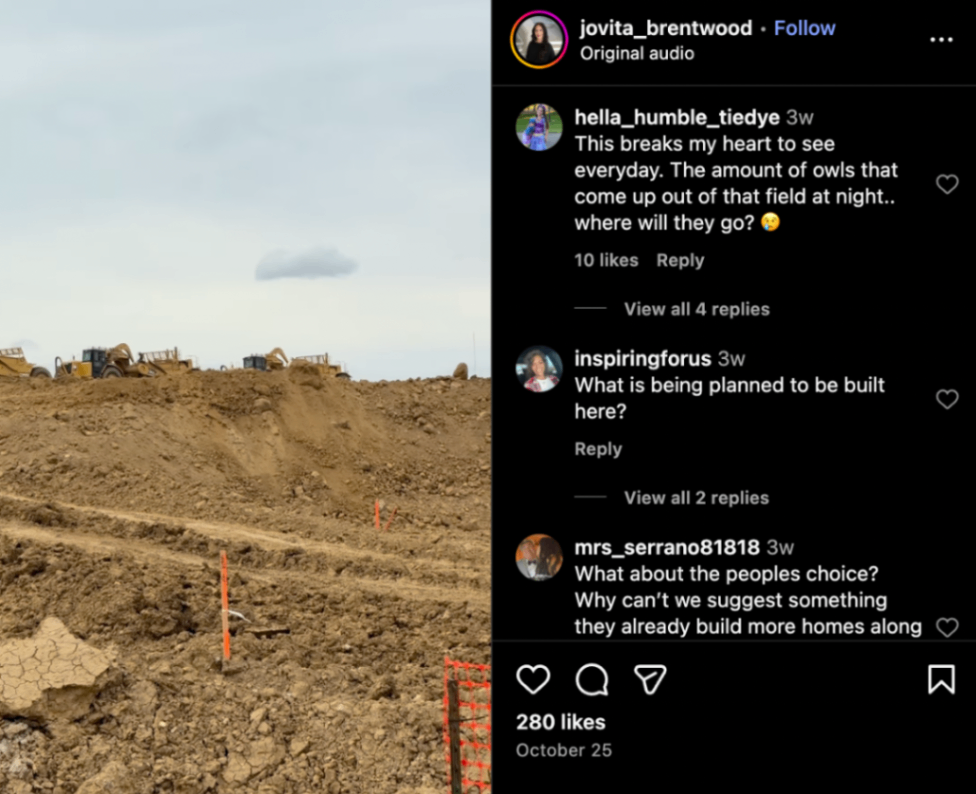
(Photo: @jovita_brentwood Instragram)
Why This Matters for Democracy
Local ballot measures are among the strongest tools residents have. When voters pass them, they become law, binding on staff, elected officials and future councils.
If a city can weaken or ignore a voter-approved land-use measure, residents ask what prevents the same from happening to others. To them, this is about more than zoning. It is about whether public power still rests with the public.
Measure G did not fade because voters repealed it. It faded through administrative erosion, the gradual undoing of the oversight voters intended.
The OpGov.ai Investigation
This article marks the beginning of a public, document-driven investigation into San Ramon’s compliance with Measure G.
OpGov.ai will:
1. Continue reviewing FOIA documents already received
2. Analyze new records as they arrive
3. Identify points where Measure G procedures may have been bypassed
4. Contact current and former officials for explanations
5. Publish findings and timelines so residents can see the whole picture
6. Invite the community to share their experiences with San Ramon’s land-use process
The goal is not to accuse, it’s to document. To verify what happened, what didn’t, and what residents deserve to know.
Measure G was the public’s safeguard. If it was ignored, the public deserves to see how, when, and why.
If you have thoughts to share, please reach out to me through email ananya.s@lead4earth.org.
1
1

Comments